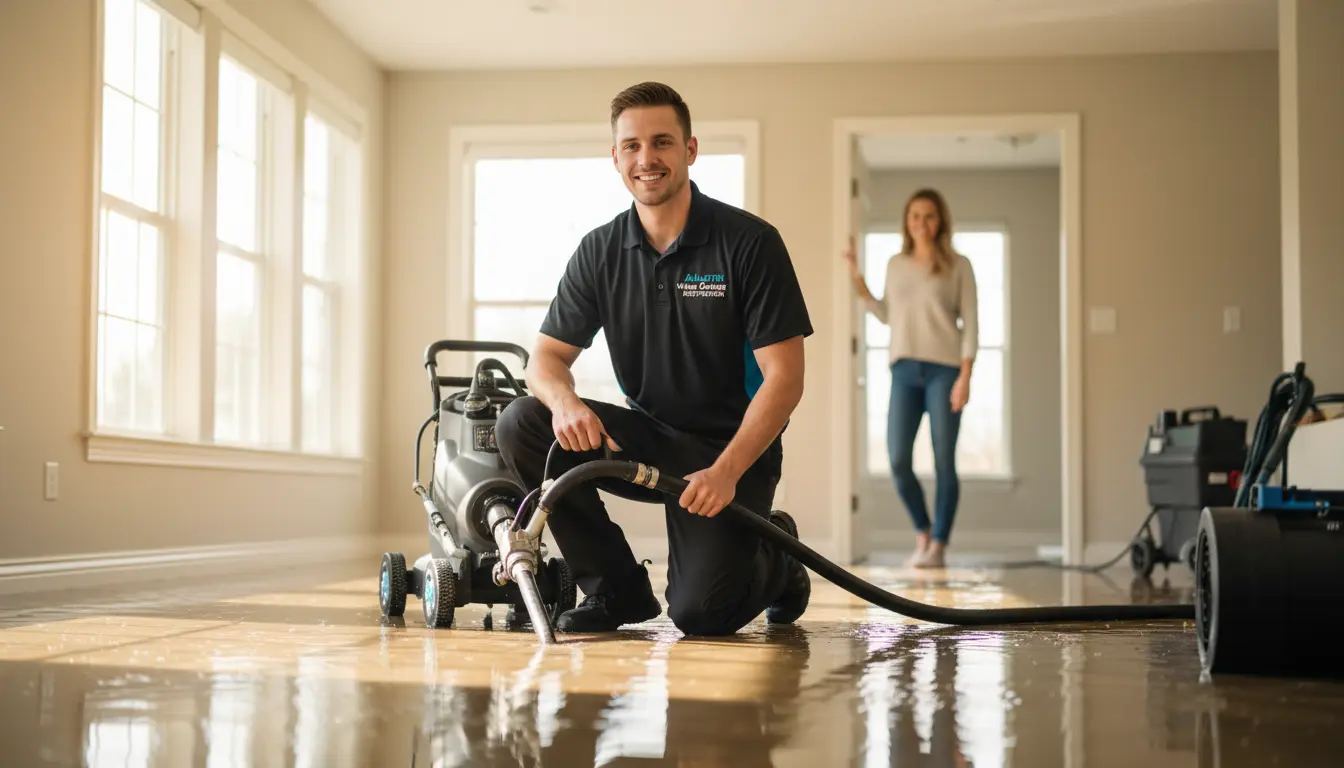
Understanding the fundamental difference between water mitigation and restoration in Arlington services is the first step toward successfully recovering your property. While these terms are often used interchangeably by homeowners, they represent two distinct phases of the recovery lifecycle. Mitigation is your immediate emergency response—it is about “stopping the bleeding” and preventing secondary damage. Restoration, conversely, is the long-term process of rebuilding and returning your home to its pre-loss aesthetic and structural condition. For an exhaustive look at this journey, consult our ultimate guide to water damage restoration in Arlington, TX.
The Critical Phase: Water Mitigation
Water mitigation is the most time-sensitive component of the process. In Arlington, where high ambient humidity acts as a catalyst for microbial growth, mitigation must begin within 24 to 48 hours. The primary objective is to stabilize the structure and secure it against further loss. This phase involves heavy-duty mechanical intervention to extract standing water and drop the indoor relative humidity to safe levels. Skipping or delaying mitigation almost always guarantees that salvageable building materials—like drywall and hardwood—will eventually require a total tear-out.
Key Components of Mitigation
- Emergency Source Stop: Halting the flow of water at the main valve or repairing the immediate pipe breach.
- High-Lift Extraction: Utilizing truck-mounted vacuums to physically remove 90% of the water mass from carpets, pads, and subfloors.
- Thermodynamic Drying: Deploying LGR dehumidifiers and axial air movers to pull bound moisture out of saturated framing. To learn about how this prevents long-term decay, review our what to do after water damage in Arlington checklist.
- Antimicrobial Application: Applying biocides to neutralize pathogens, particularly in Category 2 and 3 water situations.
The Rebuilding Phase: Water Damage Restoration
Once the mitigation team has verified that all building materials have returned to their “Dry Standard,” the restoration phase begins. This is the stage where the property is actually put back together. Restoration is typically less time-sensitive but far more labor-intensive, involving multiple skilled trades to repair the aesthetic and functional elements of the home. Without proper restoration, your home may be dry, but it remains a construction zone with missing drywall, pulled-up flooring, and exposed framing.
Key Components of Restoration
- Structural Repairs: Replacing drywall, insulation, and subflooring that was damaged beyond the point of salvage.
- Finish Carpentry: Reinstalling baseboards, crown molding, and cabinetry that were removed during the drying phase.
- Aesthetic Refinishing: Sanding and refinishing hardwood floors, repainting walls, and re-stretching or replacing carpets.
- Final Inspections: Conducting a thorough clearance test to ensure the property meets local Arlington building codes and is safe for occupancy.
Comparison of Mitigation vs. Restoration
Choosing to prioritize one over the other—or attempting a DIY version of either—drastically alters the recovery timeline. The table below highlights the distinct roles these two services play in your home’s recovery.
| Factor | Water Mitigation | Water Restoration |
|---|---|---|
| Primary Goal | Damage Control & Stabilization | Rebuilding & Aesthetic Recovery |
| Timing | Immediate (0-48 Hours) | Post-Drying (Weeks) |
| Process | Extraction, Dehumidification, Sanitization | Drywall, Flooring, Painting, Carpentry |
| Insurance Role | Usually Mandatory (Duty to Mitigate) | Subject to Coverage Payouts |
Pricing and Financial Considerations
Pricing for mitigation and restoration services in Arlington is calculated using distinct metrics. Mitigation is often billed based on equipment usage (dehumidifiers and air movers per 24-hour period), while restoration is billed by the linear foot or square foot for materials and labor. On average, total project costs range from $3 to $10 per square foot. For a detailed breakdown of metroplex cost factors, review the shocking stats on water damage costs in the DFW area.
Security, Safety, and Common Failures
Water intrusion introduces immediate hazards. Submerged electrical outlets create electrocution risks, while floodwater entering from the outside (Category 3) contains raw sewage pathogens. A common mistake is hiring a general handyman who skips the mitigation phase and goes straight to “restoration” by painting over wet drywall. This traps moisture inside the wall, leading to hidden framing rot and toxic mold colonies. Professional structural drying is the only way to ensure the restoration phase is built on a solid, dry foundation.
Advanced Frequently Asked Questions
Yes. If you skip mitigation, your home will rot and grow mold. If you skip restoration, your home remains in a “stripped-back” state with missing flooring and walls. Both are essential for a complete recovery.
Most insurance policies require you to perform mitigation immediately to protect the property from further loss. This is why many carriers have separate “emergency service” limits and will pay for mitigation as soon as the documentation is provided.
Mitigation (drying) typically takes 3 to 5 days. Restoration (rebuilding) can take anywhere from one week to several months, depending on the availability of materials and the complexity of the finishes.
Do not let a semantic confusion dictate the lifespan of your property. If you are dealing with a severe leak or sudden flooding, fast action with modern mitigation equipment is your only defense against compounding financial loss. Please contact our 24/7 rapid response dispatch today for an emergency assessment, and let our certified local experts deploy the technology required to secure your home.