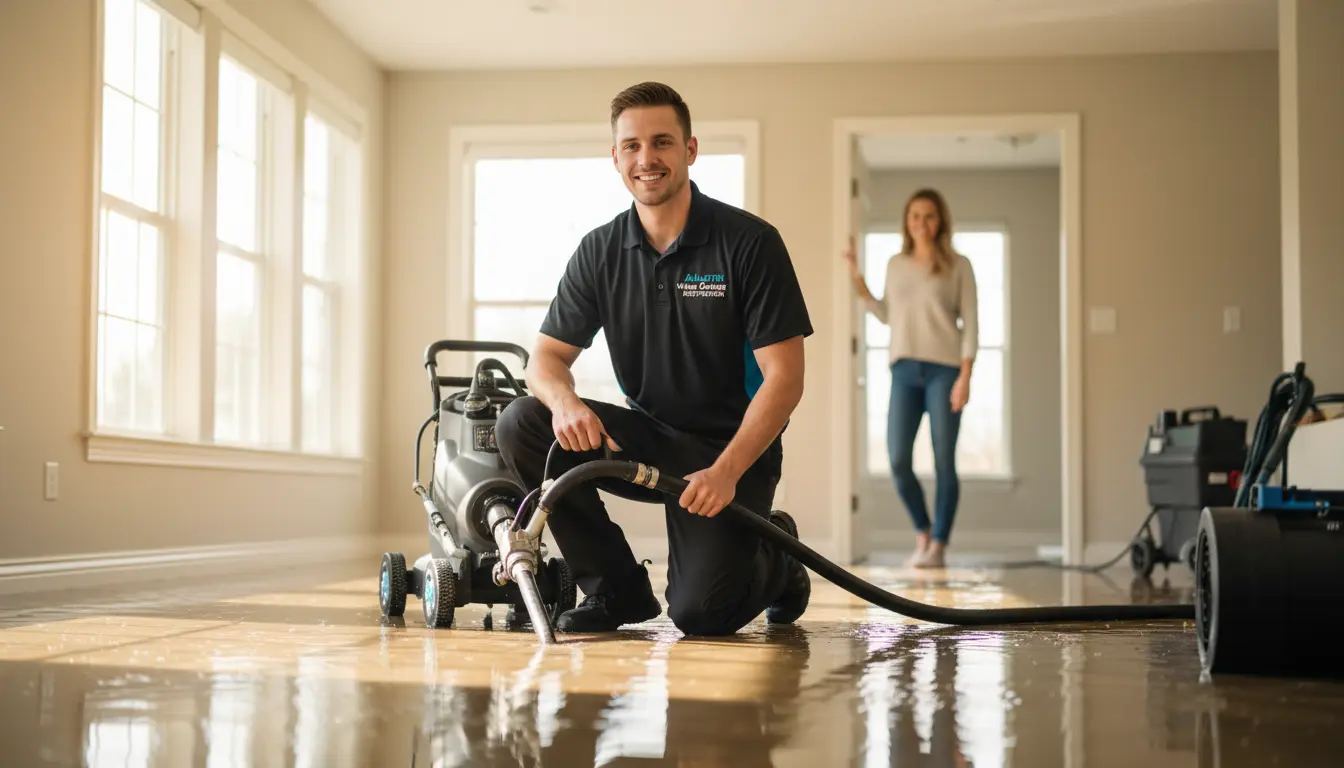
How long does water damage restoration take in Arlington properties after severe flooding? This is the most common question homeowners ask after a catastrophic event. In Arlington, TX, the timeline for recovery is dictated by the city’s humid subtropical climate and the sheer volume of water introduced into the building envelope. Whether the source was torrential rainfall, a pressurized pipe burst, or a localized sewage backup, the biological clock for structural decay starts the moment the material becomes saturated. For a complete understanding of the technical recovery path, consult our ultimate guide to water damage restoration in Arlington, TX.
Why Restoration Timelines Matter Locally
In the DFW metroplex, standing water is a catalyst for rapid microbial colonization. Arlington’s high environmental humidity levels prevent natural evaporation, meaning that once moisture permeates drywall, carpet padding, or wooden framing, it stays trapped. If mechanical intervention is not deployed within the first 48 hours, clean water (Category 1) degrades into a biohazard (Category 3). This transition drastically extends the restoration timeline from a few days of drying to several weeks of demolition and mold remediation.
Identifying Hidden Saturation Early
Surface water represents only a fraction of the problem. Moisture rapidly migrates behind kitchen cabinetry and wicks up the interior of wall cavities. Property owners must monitor for hidden water damage markers: unexplained spikes in indoor humidity, baseboards pulling away from the drywall, and persistent musty odors. Detecting these signs within the first 24 hours can shave days off the industrial drying process.
The Professional Restoration Workflow
A certified mitigation team follows a strict psychrometric protocol to stabilize your home. Attempting to dry a structure with household fans is ineffective because they only circulate wet air; industrial restoration involves manipulating the thermodynamics of the environment:
- Psychrometric Mapping: Utilizing thermal imaging and moisture meters to map the saturation perimeter.
- Deep Subsurface Extraction: Deploying truck-mounted vacuums to physically pull 95% of the water mass out of subfloors and pads. Learn more about this in our emergency water removal guide.
- Engineered Dehumidification: Placing Low Grain Refrigerant (LGR) dehumidifiers to force bound moisture out of structural studs.
- Restoration & Reconstruction: Once the “Dry Standard” is verified, structural repairs like drywall replacement and floor refinishing begin.
Performance Impact & Strategy Comparison
Choosing amateur cleanup methods over professional intervention is the leading cause of failed structural recovery. The table below illustrates the extreme differences in performance, safety, and financial risk between DIY attempts and engineered structural drying.
| Recovery Strategy | Drying Timeline | Final Moisture Level | Structural Risk Profile |
|---|---|---|---|
| DIY (Towels & Box Fans) | 7 to 14 Days | > 20% (Saturated) | High (Guaranteed Mold & Rot) |
| Uncertified Handyman | 4 to 7 Days | 15% to 18% | Medium (Risk of Secondary Swelling) |
| Professional IICRC Team | 24 to 72 Hours | < 10% (Dry Standard) | Low (Environment Secured) |
Pricing, Security, and Biological Hazards
The cost to restore an Arlington property is tied directly to the Category of water and the time elapsed. Mitigation for clean water is highly cost-effective, typically ranging from $1,500 to $5,000. However, allowing water to sit guarantees microbial amplification, forcing technicians into full-scale biohazard containment and demolition, which can push final invoices past $10,000. For an exact breakdown of metroplex costs, review the shocking stats on water damage costs in the DFW area.
Pro Tips for Arlington Homeowners
- The 24-Hour Rule: Always dispatch a professional team within 24 hours to ensure building materials can be salvaged rather than discarded.
- Document Before Extraction: Take high-resolution photos of the water level and all saturated furniture to guarantee a smooth insurance claims process.
- Locate Your Main Valve: Every family member must know exactly how to shut off the main water supply to halt catastrophic pipe bursts immediately.
Common Mitigation Mistakes to Avoid
- Delaying the Call: Waiting for an insurance adjuster to arrive before extracting water allows irreversible mold colonization.
- Painting Over Stains: Covering a water stain without verifying the cavity behind it is dry ensures framing rot behind the new paint.
- Hiring Uncertified Contractors: Utilizing laborers who lack specialized moisture-mapping equipment leaves your property vulnerable to hidden rot.
Frequently Asked Questions
Depending on severity, mitigation ranges from $3 to $7 per square foot. Contaminated Category 3 flooding requiring structural tear-outs and biohazard cleaning will significantly increase the total project cost.
With industrial extraction and LGR dehumidification, the structural drying phase typically concludes within 3 to 5 days. Full reconstruction can take an additional 1 to 2 weeks.
No. Standard fans only move moisture from the floor into the air, increasing indoor humidity and causing secondary damage to upper drywall and cabinetry. You must use LGR dehumidifiers to physically extract the vapor from the environment.
Do not wait for structural failure or toxic mold to dictate the lifespan of your property. If you are dealing with a flood or severe leak, fast action with modern equipment is your only defense against compounding financial loss. Please contact our 24/7 rapid response team today for a free assessment, and let our certified experts deploy the technology required to save your home.