Water damage can strike without warning, turning your cozy Arlington home into a soggy nightmare. Whether it’s a burst pipe in your West Arlington kitchen or flooding from heavy rains in South Arlington, the aftermath demands swift action. At Arlington Water Damage Restoration, we’ve helped countless residents navigate these crises, restoring properties to their pre-loss condition with precision and care. This comprehensive guide will walk you through everything you need to know about water damage restoration in Arlington, TX, empowering you to respond effectively and minimize long-term damage.
Understanding Water Damage: Causes and Categories
Water damage isn’t just about wet floors—it’s a complex issue that can compromise your home’s structure and health. In Arlington, common culprits include severe thunderstorms, aging plumbing in older Downtown Arlington homes, and even appliance malfunctions.
Common Causes in Arlington Homes
Arlington’s humid climate and proximity to the Trinity River make flooding a frequent threat. Here are the top causes:
- Storm and Flood Damage: Heavy rains can overwhelm drainage systems, especially in low-lying North Arlington neighborhoods.
- Plumbing Failures: Leaky pipes or water heater bursts are everyday issues in family homes.
- Appliance Mishaps: Washing machines and dishwashers often cause sudden overflows.
Understanding these helps in prevention. For instance, regular maintenance of your home’s plumbing can avert disasters.
Categories of Water Damage
Water damage is classified into three categories by the Institute of Inspection Cleaning and Restoration Certification (IICRC):
- Category 1 (Clean Water): From sources like broken supply lines—least harmful but still requires prompt attention.
- Category 2 (Gray Water): Contaminated from sump pumps or washing machines—poses health risks.
- Category 3 (Black Water): Severely contaminated from sewage or floodwaters—demands immediate professional intervention to avoid mold and bacteria growth.
In Arlington’s variable weather, Category 3 damage is particularly common after flash floods, underscoring the need for experts like our team at Arlington Water Damage Restoration.
The Step-by-Step Water Damage Restoration Process
Restoring water-damaged properties involves a systematic approach. Here’s how we handle it at Arlington Water Damage Restoration, tailored to local needs.
Step 1: Emergency Assessment and Water Extraction
Time is critical—the first 24-48 hours are pivotal to prevent further damage. Upon arrival, our technicians conduct a thorough inspection to assess the extent of the water intrusion.
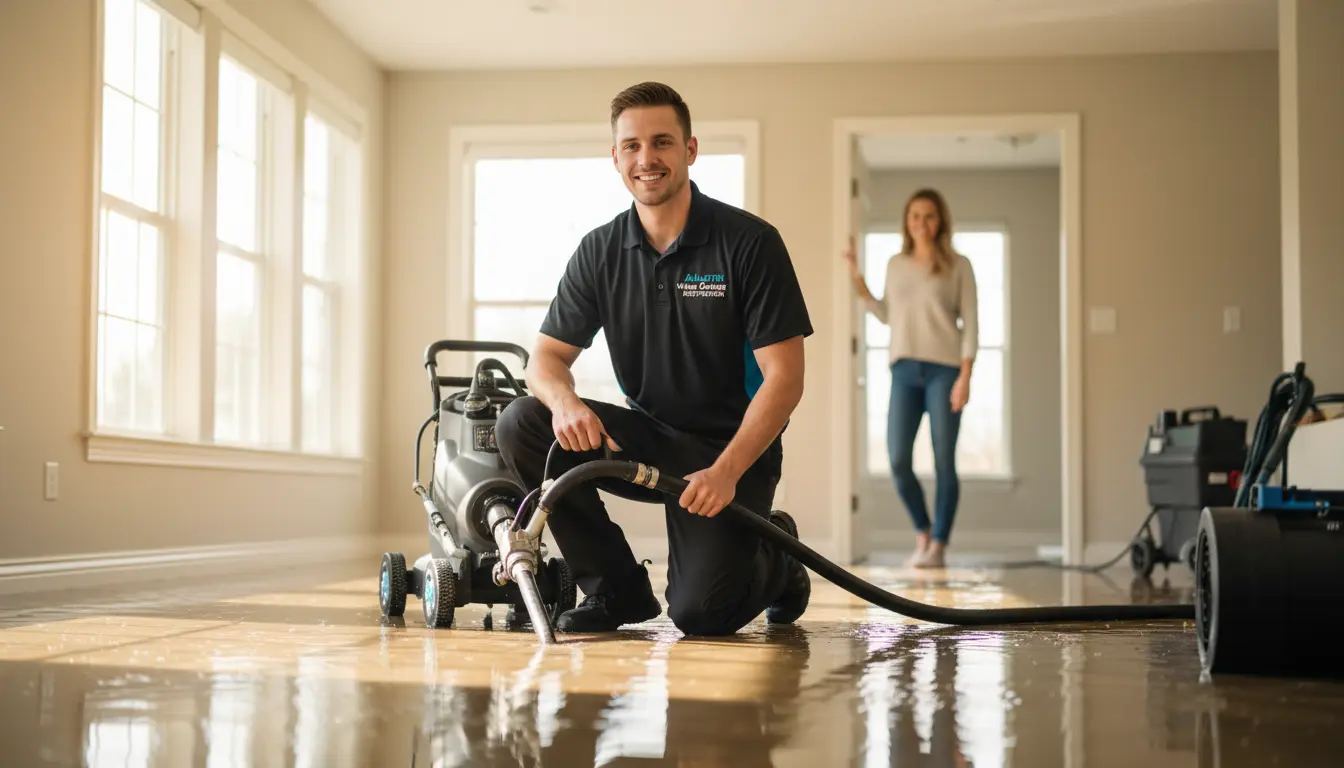
For immediate relief, we employ emergency water extraction using powerful pumps and vacuums. This removes standing water quickly, especially vital in Downtown Arlington condos where space is limited. Pro Tip: If you spot water, shut off the main valve and avoid electrical hazards—don’t wait for professionals, but call them right away.
Step 2: Structural Drying and Dehumidification
Once water is extracted, drying begins. We use industrial-grade air movers and dehumidifiers to evaporate moisture from walls, floors, and ceilings.
Our structural drying process ensures even drying, preventing warping in hardwood floors common in Arlington’s mid-century homes. Monitor humidity levels; aim for under 60% to inhibit mold. Actionable Advice: In the interim, open windows if safe and use fans, but this is no substitute for professional equipment.
Step 3: Moisture Detection and Cleaning
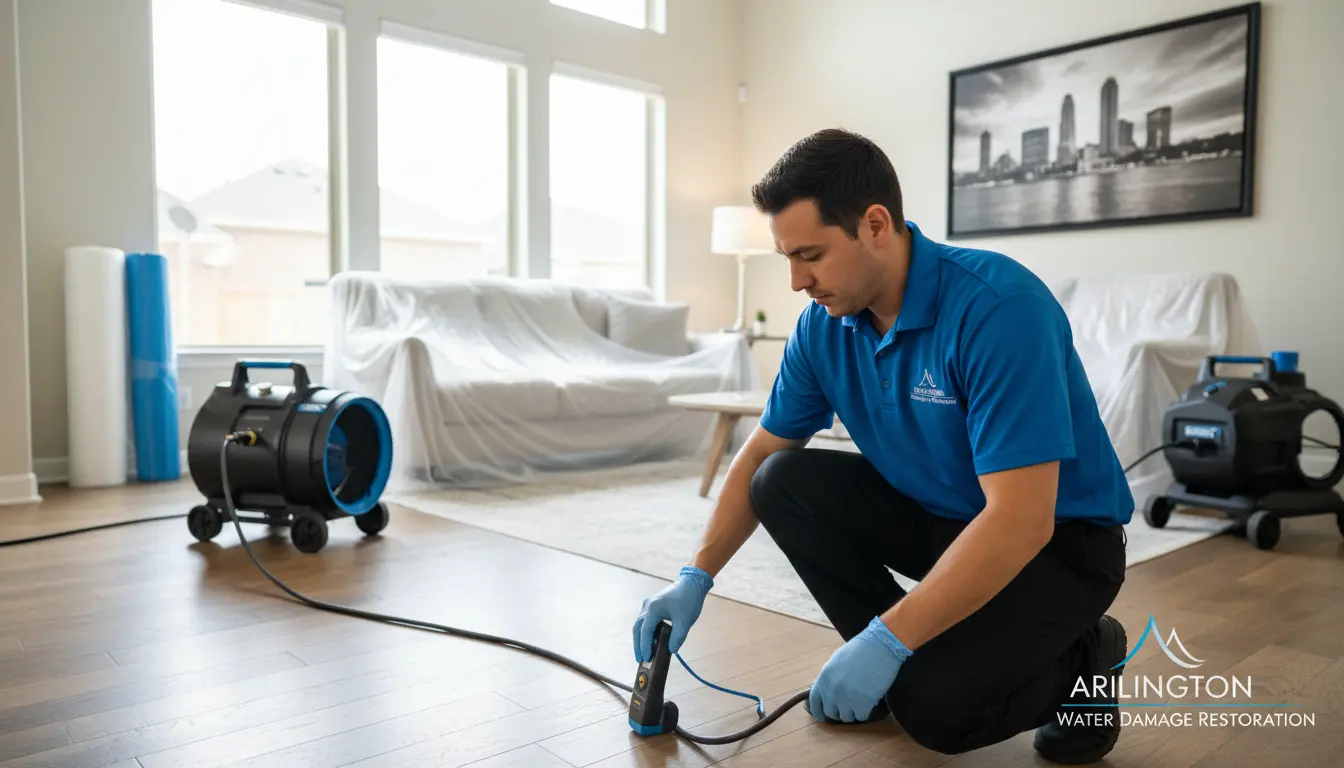
Hidden moisture can lurk behind walls or under carpets, leading to unseen mold growth. We utilize advanced tools for moisture detection services, scanning for damp spots that could compromise your home’s integrity.
Cleaning follows: We remove damaged materials like soaked drywall and sanitize surfaces with EPA-approved antimicrobial agents. In Arlington’s warm climate, this step is crucial to combat mold spores that thrive in humidity.
Step 4: Restoration and Reconstruction
The final phase rebuilds your space. This might involve replacing flooring, repainting, or reconstructing walls. We coordinate with local contractors to match Arlington’s building codes, ensuring your home in West Arlington or elsewhere is up to standard.
Practical Tip: Document everything with photos and keep receipts for insurance claims—our team assists with this paperwork to streamline your recovery.
Practical Tips for Preventing Water Damage in Arlington
Prevention is better than cure, especially in a city like Arlington with its mix of urban and suburban landscapes.
Home Maintenance Essentials
- Inspect Plumbing Regularly: Check for leaks under sinks and around toilets, particularly in older South Arlington properties.
- Clean Gutters and Drains: Arlington’s frequent rains can clog systems—schedule biannual cleanings.
- Elevate Appliances: Place washers and dryers on platforms to avoid flood damage during storms.
Weather-Proofing Your Arlington Home
Invest in sump pumps for basements and flood barriers for garages. Seal cracks in foundations to prevent seepage. Local Insight: With Arlington’s tornado-prone springs, consider weather alerts from the National Weather Service and prepare an emergency kit.
Actionable Advice: Install water leak detectors in high-risk areas like bathrooms and kitchens. These smart devices can alert you via app, giving you peace of mind.
Health and Safety Concerns After Water Damage
Water damage isn’t just structural—it’s a health hazard. Mold can trigger allergies, and contaminated water may harbor bacteria like E. coli.
Immediate Safety Measures
Evacuate if sewage is involved, and wear protective gear during cleanup. In Arlington’s family-oriented communities, protecting vulnerable residents like children and the elderly is paramount.
Long-Term Health Risks
Untreated moisture leads to respiratory issues. Our restoration process includes air quality testing to ensure your North Arlington home is safe post-restoration.
Tip: After drying, use HEPA vacuums for any debris, and consider air purifiers to maintain indoor air quality.
FAQ: Common Questions About Water Damage Restoration in Arlington
How Quickly Should I Respond to Water Damage?
Act within the first hour if possible. Delaying can lead to mold growth, which becomes costlier to remediate. Contact Arlington Water Damage Restoration 24/7 for rapid response.
Does Homeowners Insurance Cover Water Damage in Arlington?
Most policies cover sudden accidents like burst pipes but not neglect-related issues. Review your policy and consult us—we help file claims efficiently.
Can I Handle Minor Water Damage Myself?
For small, clean water incidents, yes—use towels and fans. But for anything involving gray or black water, call professionals to avoid health risks.
How Long Does the Restoration Process Take?
It varies: Extraction might take hours, drying days, and full restoration weeks. Factors like damage extent and Arlington’s humidity play a role.
What If Mold Appears After Restoration?
Mold can develop if moisture persists. Our moisture detection services catch issues early—reach out if you suspect growth.
Conclusion: Safeguard Your Arlington Home Today
Water damage restoration in Arlington, TX, requires knowledge, speed, and expertise. From initial extraction to final touches, Arlington Water Damage Restoration is your trusted partner, serving all areas from Downtown Arlington to the suburbs. Don’t let water wreak havoc—equip yourself with these insights and act decisively.
Ready to protect or restore your property? Contact Arlington Water Damage Restoration now for a free assessment. Call us at (817) 670-9404 or visit our site to schedule emergency services. Your home deserves the best—let’s make it happen!