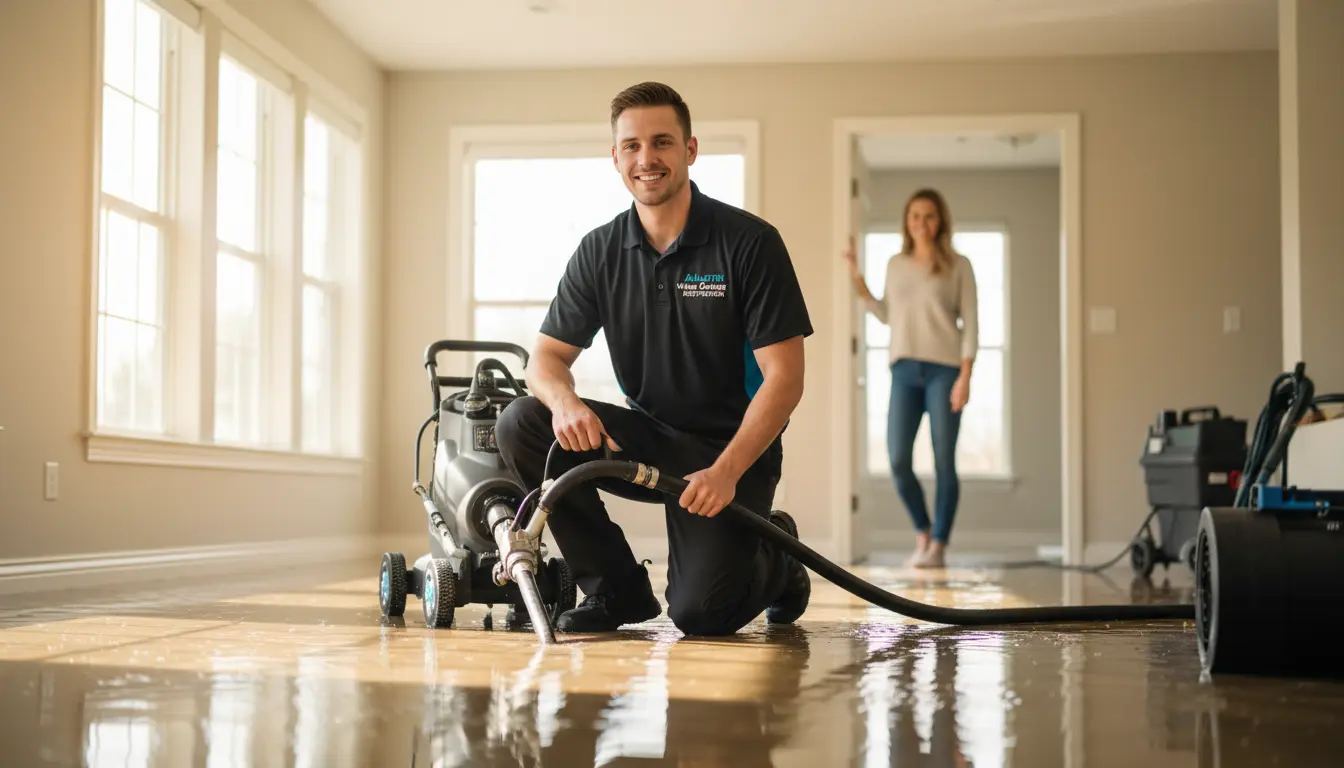
When a pressurized residential water line bursts, it can release hundreds of gallons of water per hour directly into your living space. In Arlington, Texas, it is essential to understand exactly how the professional water damage restoration in Arlington process works step-by-step. Rapid intervention is the only way to minimize long-term property destruction, salvage flooring, and prevent the compounding complication of toxic mold amplification.
Why Immediate Structural Mitigation Matters Locally
Water damage mitigation is uniquely urgent in Arlington due to the region’s intense weather shifts and aging infrastructure. Sudden winter freezes can compromise improperly insulated pipes, while the humid subtropical climate during the rest of the year creates the perfect environment for trapped moisture to fester. When a pipe ruptures inside a wall or ceiling, the water migrates rapidly into hygroscopic (water-absorbing) materials like drywall and wooden studs. If this moisture is not forcefully extracted within 48 hours, structural failure is inevitable.
Critical Signs of a Concealed Pipe Rupture
Sometimes a pipe burst is a catastrophic flood; other times, it is a high-pressure pinhole leak hidden behind your cabinetry. Homeowners must be hyper-vigilant for the signs of hidden water damage. You should actively look for localized spikes in your utility bill, peeling or bubbling paint, baseboards separating from the wall, and the sudden cupping or buckling of hardwood floors. A persistent musty odor is a guarantee that microbial growth has already begun inside the wall cavity.
The Professional Step-by-Step Restoration Process
Reversing the effects of a burst pipe requires advanced psychrometric engineering, not just a wet-vacuum and household towels. Certified mitigation experts follow the stringent IICRC S500 guidelines to stabilize the property:
- Source Identification & Shutoff: Immediately halting the water flow at the main valve to prevent further saturation.
- Psychrometric Mapping: Using thermal imaging cameras and penetrating moisture probes to trace the exact perimeter of the water’s migration through the subfloor and walls.
- Deep Water Extraction: Deploying industrial, truck-mounted extraction units to physically pull the bulk of the standing water out of carpets and padding. Discover more about this technology in our emergency water removal guide.
- Engineered Dehumidification: Placing Low Grain Refrigerant (LGR) dehumidifiers and high-velocity axial fans to create “thirsty air,” which forces bound moisture out of the saturated wooden framing.
- Botanical Sanitization: Applying EPA-registered antimicrobials to destroy bacteria and ensure mold spores cannot colonize the damp materials.
Performance Impact & Strategy Comparison
Attempting to handle a burst pipe yourself severely alters the recovery timeline and heavily inflates the final financial outcome of the disaster. The consolidated data table below highlights the extreme differences in performance between amateur cleanup and engineered structural drying.
| Performance Metric | Without Professional Mitigation | With Certified IICRC Drying | Improvement Outcome |
|---|---|---|---|
| Active Drying Timeline | 7 to 14 Days | 24 to 72 Hours | Accelerated by up to 70% |
| Structural Moisture Levels | > 20% (Remains Saturated) | < 10% (Dry Standard) | Prevents Drywall & Framing Rot |
| Airborne Mold Risk | Extremely High | Eliminated | Secures Indoor Air Quality |
Pricing Variables and Cost Factors
The cost to mitigate a burst pipe varies depending on the water’s category (clean vs. contaminated) and the extent of the saturation footprint. Standard clean-water extraction is highly cost-effective, typically ranging from $1,500 to $4,000 depending on the square footage. However, delaying extraction allows clean water to degrade into a Category 3 biohazard within 48 hours, forcing technicians into full-scale structural demolition which can push repair costs well over $10,000.
Security, Safety, and Biological Hazards
A burst pipe introduces immediate, lethal hazards to your living space. Submerged electrical outlets create extreme electrocution risks, and saturated drywall ceilings can lose their load-bearing integrity and collapse without warning. Never wade into a flooded room without first shutting off the main electrical breaker to the affected zones. Professional technicians arrive equipped with specialized PPE and electrical testing equipment to secure the environment safely.
Common Mitigation Mistakes to Avoid
- Delaying the extraction process: Waiting to hear back from insurance adjusters before removing standing water guarantees permanent mold colonization and often leads to denied claims.
- Using standard ceiling fans: Consumer fans simply vaporize moisture into the air, drastically increasing indoor humidity and causing secondary swelling in upper drywall and cabinetry.
- Ignoring hidden moisture: Assuming a floor is dry just because the surface feels dry to the touch, while the underlying subfloor remains completely saturated.
Advanced Frequently Asked Questions
Locate your home’s main water shutoff valve (usually located outside near the street or in a utility closet) and turn it off immediately. Then, shut off the electricity to the affected rooms at the breaker box before calling a mitigation team.
In almost all cases, yes. Standard policies cover “sudden and accidental” water damage, such as a ruptured supply line. However, they strictly require the homeowner to mitigate further damage immediately. Attempting a DIY cleanup that results in mold will likely cause your secondary claim to be denied.
With industrial extraction and LGR dehumidification, the active structural drying phase typically concludes within 3 to 5 days. Highly porous materials or delayed response times may extend this timeline if controlled demolition is required.
Do not let amateur mistakes dictate the lifespan of your property or jeopardize your family’s safety. If you are dealing with a burst pipe, fast action is your only defense against compounding financial losses. Please contact our 24/7 emergency dispatch today for an immediate response, and let our certified experts deploy the heavy-duty extraction equipment required to save your home.