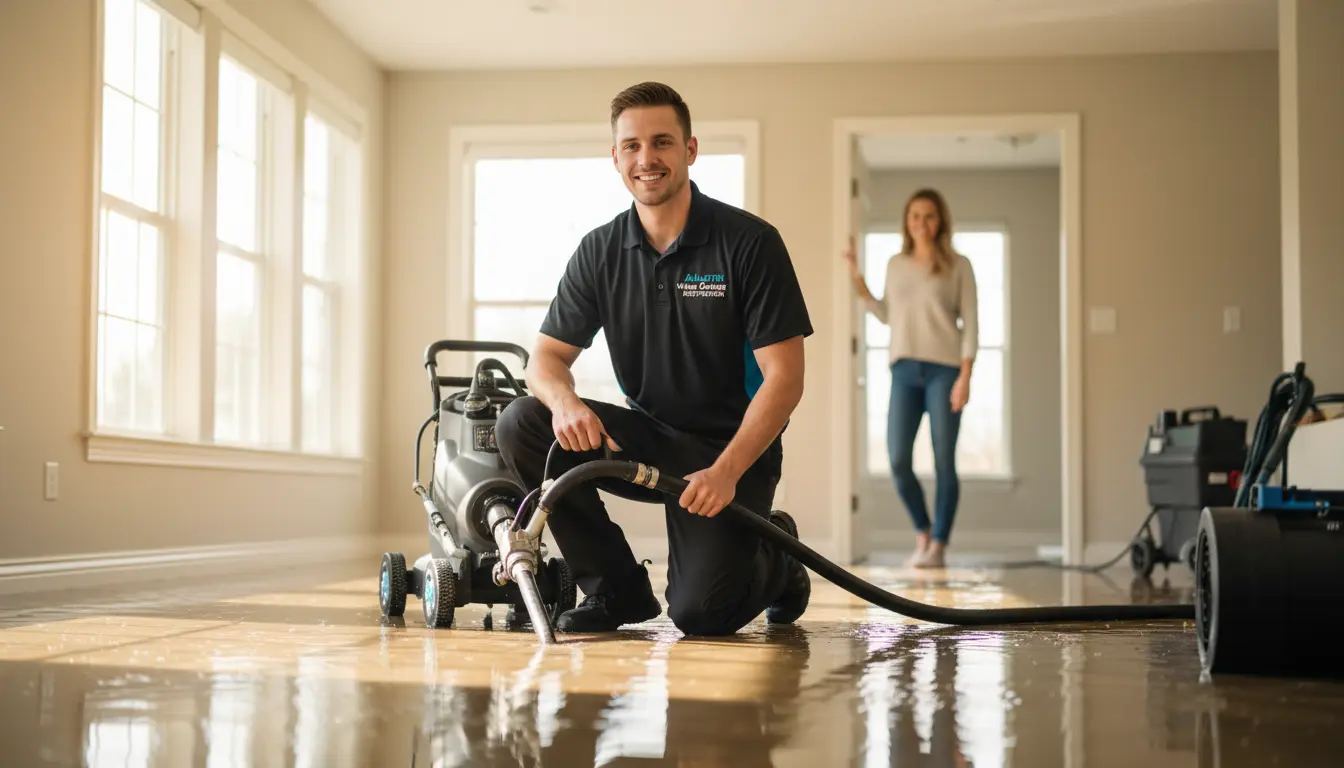
What are the long-term structural risks of untreated water damage in Arlington houses? As a homeowner, it is essential to understand that water is a universal solvent. When it escapes into your building envelope, it immediately begins deteriorating porous materials. Water damage can lead to severe structural failure, load-bearing wood rot, and toxic mold amplification if left untreated, which is why it is crucial to deploy professional water damage restoration services before secondary damage takes hold.
Why Water Mitigation Matters Locally
Arlington’s unique climate, characterized by intense summer heat, sudden torrential storm cells, and shifting clay soils, creates a volatile environment for structural water damage. When water saturates the foundation or interior framing in neighborhoods like Arlington Heights or Arlington Greens, the high ambient humidity prevents natural evaporation. Instead, the moisture remains trapped inside wall cavities, causing drywall to turn to mush and wooden studs to swell and warp. Over time, this compromises the structural integrity of the entire home.
Critical Signs You Need Immediate Mitigation
- Visible Water Stains or Baseboard Warping: Discoloration on ceilings or baseboards pulling away from the wall indicates water has traveled far beyond the initial source.
- Musty, Earthy Odors: A persistent smell of wet dirt or old socks is a guaranteed indicator of active microbial (mold) growth hidden behind your walls.
- Elevated Moisture Levels: Wood framing with a moisture content reading above 15% is highly susceptible to dry rot and termite infestation.
If you have noticed any of these indicators, the timeline for saving your structural materials is rapidly closing. It is crucial to act immediately and deploy a certified emergency water removal team to map the moisture footprint with thermal imaging.
The Professional IICRC Restoration Process
True restoration goes far beyond simply vacuuming up visible water. Certified technicians follow a strict, science-backed psychrometric process to force bound moisture out of your home’s infrastructure:
- Psychrometric Inspection and Assessment: Technicians map the migration path of the water using non-penetrating moisture meters and infrared cameras to find hidden pockets of saturation.
- Deep Water Extraction: Truck-mounted vacuums are used to remove the bulk of the standing water, which reduces the overall drying time by hours or even days.
- Engineered Dehumidification: Low Grain Refrigerant (LGR) dehumidifiers and high-velocity air movers are strategically placed to create “thirsty air,” pulling moisture from deep within the wood and drywall.
- Sanitization and Antimicrobial Clearance: The affected areas are treated with EPA-registered botanical biocides to ensure no mold spores or bacteria survive the drying process.
Mitigation Impact & Alternatives Comparison
Choosing the wrong cleanup method can permanently damage your property. While DIY methods might seem cost-effective initially, they almost always result in trapped moisture. The table below outlines the performance impact and risks associated with different recovery strategies.
| Recovery Strategy | Drying Timeline | Final Moisture Level | Structural Risk Level |
|---|---|---|---|
| DIY / Towel Cleanup | 72+ Hours | > 20% (Remains Damp) | High (Mold & Wood Rot) |
| Consumer Box Fans | 48-72 Hours | 15% – 18% | Medium (Secondary Swelling) |
| Professional LGR Drying | 24-48 Hours | < 10% (Dry Standard) | Low (Stabilized) |
Pricing Variables and Cost Factors
The total investment required to restore a water-damaged property in Arlington is dictated by the water’s category (clean, grey, or black water), the square footage of the saturation, and how quickly the drying process began. On average, standard mitigation can range from $1,000 to $5,000. However, delaying extraction guarantees the need for structural demolition, which severely inflates the cost. For a deeper understanding of local financial impacts, review our shocking stats on water damage costs in the DFW metroplex.
Security, Safety, and Biological Hazards
Water damage poses severe risks to your family’s safety. Beyond the obvious slip-and-fall hazards, water interacting with your home’s electrical system can create lethal shock risks or spark electrical fires. Furthermore, if water sits for more than 48 hours, it degrades into a Category 3 biohazard, becoming a breeding ground for toxic molds like Stachybotrys chartarum. It is absolutely essential to work with certified professionals who wear proper PPE and establish negative-air containment zones to protect your breathable air.
Pro Tips for Arlington Homeowners
- Act Within 24 Hours: The first 24 to 48 hours are the golden window. Extracting water quickly prevents clean water from degrading into hazardous gray or black water.
- Locate Your Main Shutoff: Every homeowner must know exactly where their exterior water main shutoff valve is located to halt catastrophic pipe bursts instantly.
- Document Everything: Before the mitigation team begins moving furniture, take high-resolution videos and photos of the standing water to guarantee a smooth insurance claims process.
Common Mitigation Mistakes
- Delaying the extraction process while waiting for an insurance adjuster to call back, which allows mold to take root.
- Using standard ceiling fans instead of commercial dehumidifiers, which simply blows wet air around the room and causes secondary damage to upper cabinets.
- Painting over water stains without verifying the wall cavity behind it is completely dry.
- Hiring uncertified local handymen who lack the specialized moisture-mapping equipment required to confirm the home is safe.
Advanced FAQs
The active drying phase (mitigation) typically takes between 3 to 5 days using commercial dehumidification. However, if structural tear-out and reconstruction (putting in new drywall and floors) are required, the full restoration timeline can span several weeks.
In most cases, yes, provided the water damage was sudden and accidental (like a burst pipe or an overflowing appliance). Gradual damage resulting from long-term neglect or lack of maintenance is usually denied.
If the drywall was saturated by clean water and dried rapidly within 48 hours, it can sometimes be salvaged. However, if the water was contaminated (sewage/flood water) or if the drywall has lost its structural rigidity and begun to crumble, it must be cut out and replaced.
Conclusion
Untreated water damage is a quiet destroyer of property values and structural integrity. The longer moisture sits in your floorboards and walls, the more expensive and hazardous the recovery becomes. If you are facing sudden water intrusion in your Arlington home, do not wait for the damage to multiply. Contact the certified rapid-response team at Mold Water DFW immediately. We offer 24/7 emergency water extraction services designed to halt secondary damage and restore your home to its safe, pre-loss condition.