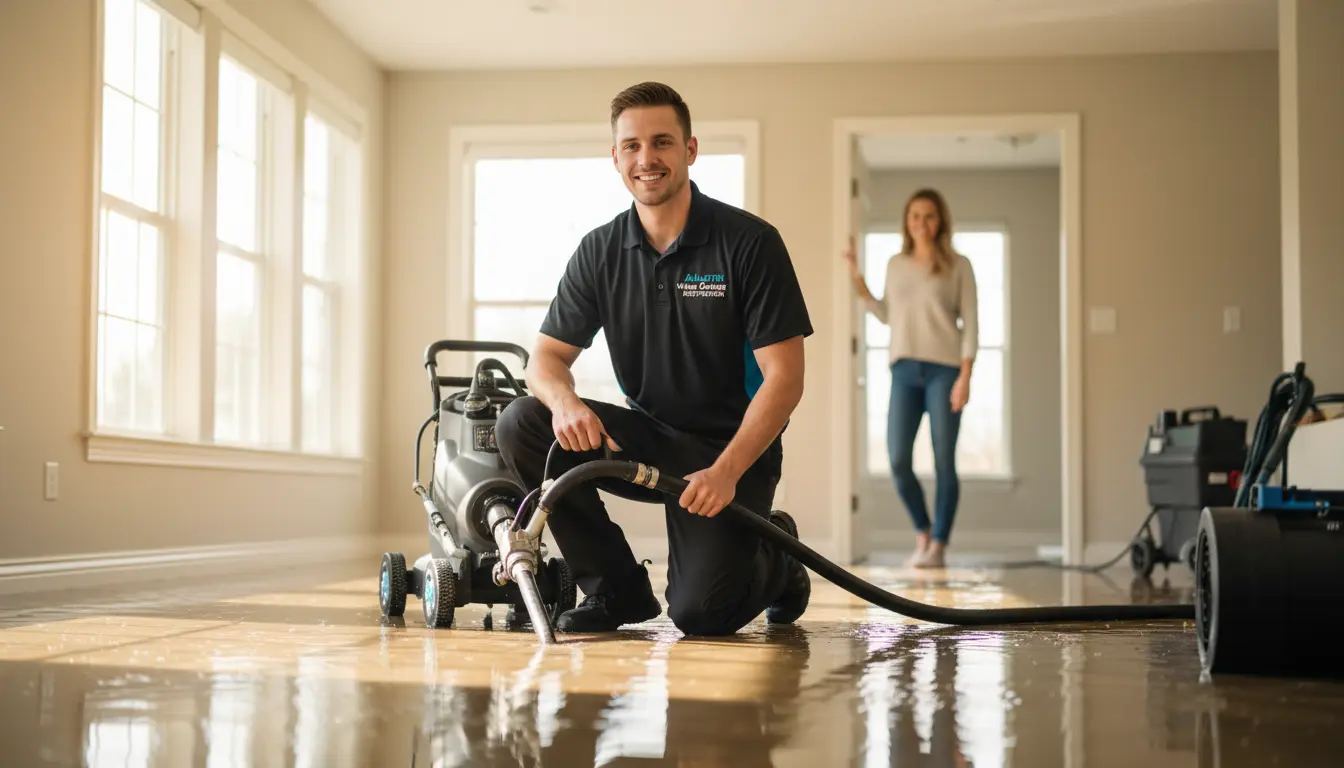
In Arlington, heavy storms aren’t just a seasonal inconvenience—ils represent a significant threat to your home’s structural integrity. With flash floods common near the Trinity River and intense thunderstorms frequently hitting South Arlington, the building envelope of your property is under constant pressure. Proactive weatherproofing is the only way to avoid the staggering $5,000+ repair bills that follow a breach. To master the specifics of local property defense, start with our ultimate guide to water damage restoration in Arlington, TX.
Why Structural Defense Matters in Texas
Texas humidity is the silent catalyst that turns a small leak into a total home loss. When storm water enters through your roof or foundation, Arlington’s high ambient humidity prevents that moisture from evaporating naturally. Instead, it becomes trapped in the insulation and wall cavities, allowing toxic mold to colonize your home within 48 hours. This is why standard drying isn’t enough—you need engineered structural mitigation to pull moisture from deep within the wooden studs.
Subtle Indicators of Storm Breach
Visible puddles are obvious, but the real danger lies in what you can’t see. Look for yellowed ceiling corners, baseboards that feel “soft” to the touch, or the sudden cupping of hardwood floors. These are signs that the building’s exterior seal has failed. If you suspect moisture has migrated behind your drywall, consult the 5 signs of hidden water damage in Arlington homes for a professional checklist.
Professional Prevention & Mitigation Workflow
If a storm breaches your home, a shop-vac and box fans will fail. Professional restoration teams utilize applied psychrometrics to alter the thermodynamics of your home’s air, literally ripping the moisture out of porous materials. Our specialized process includes:
- Thermal Inspection: We use infrared thermography to map hidden moisture paths without tearing down walls.
- Hydrostatic Extraction: Removing standing water from subfloors using truck-mounted vacuum systems.
- LGR Dehumidification: Deploying Low Grain Refrigerant units to drop grains per pound (GPP) below outdoor levels.
- Antimicrobial Sealing: Preventing the “wet dog” odor by treating surfaces with EPA-registered botanical sanitizers.
The Cost of Inaction vs. Professional Defense
Homeowners often try DIY cleanup to save money, only to face $10,000+ mold remediation bills months later. The data below shows why a 24-hour professional response is the only way to ensure your property remains salvageable.
| Recovery Metric | Amateur Effort (Fans) | Professional IICRC Drying | Efficiency Gain |
|---|---|---|---|
| Active Drying Timeline | 7-10 Days | 2-3 Days | Accelerated by 70% |
| Residual Moisture Level | 30-40% (Damp) | < 12% (Bone Dry) | Prevents Structural Rot |
| Secondary Mold Risk | High (Guaranteed) | Near Zero | Ensures Air Safety |
Financial Strategy and Claims Logistics
In Arlington, the cost of emergency storm mitigation typically ranges from $3 to $8 per square foot. While this is an investment, it is often fully covered by homeowners insurance if the damage was “sudden and accidental.” Most carriers will deny a claim if they determine you failed in your “duty to mitigate”—meaning you didn’t call professional extractors immediately. Review the shocking stats on water damage costs in the DFW area to see the real-world impact of delay.
Advanced Storm Preparation Pro-Tips
- Grading Check: Ensure the soil around your foundation slopes 6 inches away from the home over a 10-foot span to prevent slab seepage.
- Sump Pump Redundancy: If you have a basement or low-lying crawlspace, install a battery-backup for your sump pump; Arlington storms frequently knock out power.
- Gutter Maintenance: Clear your downspouts of North Texas oak leaves and ensure they discharge at least 5 feet away from the foundation.
Common Restoration Mistakes
The biggest mistake property owners make is thinking a surface is dry because it feels dry. Plaster and drywall can hold 30% moisture while feeling dry to the touch, providing a feast for mold. Never use bleach on porous wood; it is 90% water and will actually feed the mold roots deeper into the grain. Instead, utilize industrial air movers that create laminar airflow across the surface to break the boundary layer of moisture.
Frequently Asked Questions
Q: Will my insurance cover storm water entering through the foundation?
A: Standard policies usually only cover water entering from “above” (roof leaks). Foundation seepage often requires a specific flood policy or a “sump pump failure” rider.
Q: How long should I run dehumidifiers after a storm?
A: Professionals run equipment for 3 to 5 days. We use moisture meters to verify that the “Dry Standard” has been met before removing equipment to ensure no hidden rot begins.
Do not wait for the clouds to break before checking your home’s defenses. If a storm has already compromised your property, immediate extraction is your only way to salvage your flooring and framing. For immediate assistance, refer to our what to do after water damage Arlington residents checklist. Our team is available 24/7 to secure your home from the next North Texas deluge.