As a homeowner in North Arlington, it’s essential to be aware of the hidden signs of water damage behind walls, which can lead to catastrophic structural failure and toxic microbial growth. Because water follows the path of least resistance, a roof leak or a burst pipe in the upstairs bathroom may not show up as a puddle on the floor; instead, it wicks through the drywall and insulation, remaining invisible for weeks. If you suspect your building envelope has been breached, review our 5 signs of hidden water damage in Arlington homes to catch the issue before it necessitates full-scale demolition.
Why Water Damage Restoration Matters Locally
Water damage can cause significant property risks in North Arlington due to the area’s humid subtropical climate and older residential infrastructure. In neighborhoods near the Trinity River, high soil moisture can exert hydrostatic pressure on foundations, leading to seepages that remain trapped behind finished basement walls. If this moisture is not forcefully extracted, it creates a localized microclimate that fuels “black mold” colonization within 48 hours. Addressing these hidden intrusions promptly ensures a safe living environment and prevents your insurance carrier from denying claims due to “gradual damage” neglect.
Subtle Indicators of Wall Cavity Saturation
Homeowners must be hyper-vigilant for signs that go beyond visible stains. One of the primary indicators is a localized spike in humidity in a specific room, even when the AC is running. Other red flags include baseboards that feel soft or are beginning to separate from the wall, paint that is bubbling or “cracking” without a clear cause, and a persistent, earthy odor that intensifies when the home is closed up. If you notice any of these markers, professional water damage restoration in Arlington, TX is required to map the moisture footprint using infrared technology.
The Professional Restoration Protocol
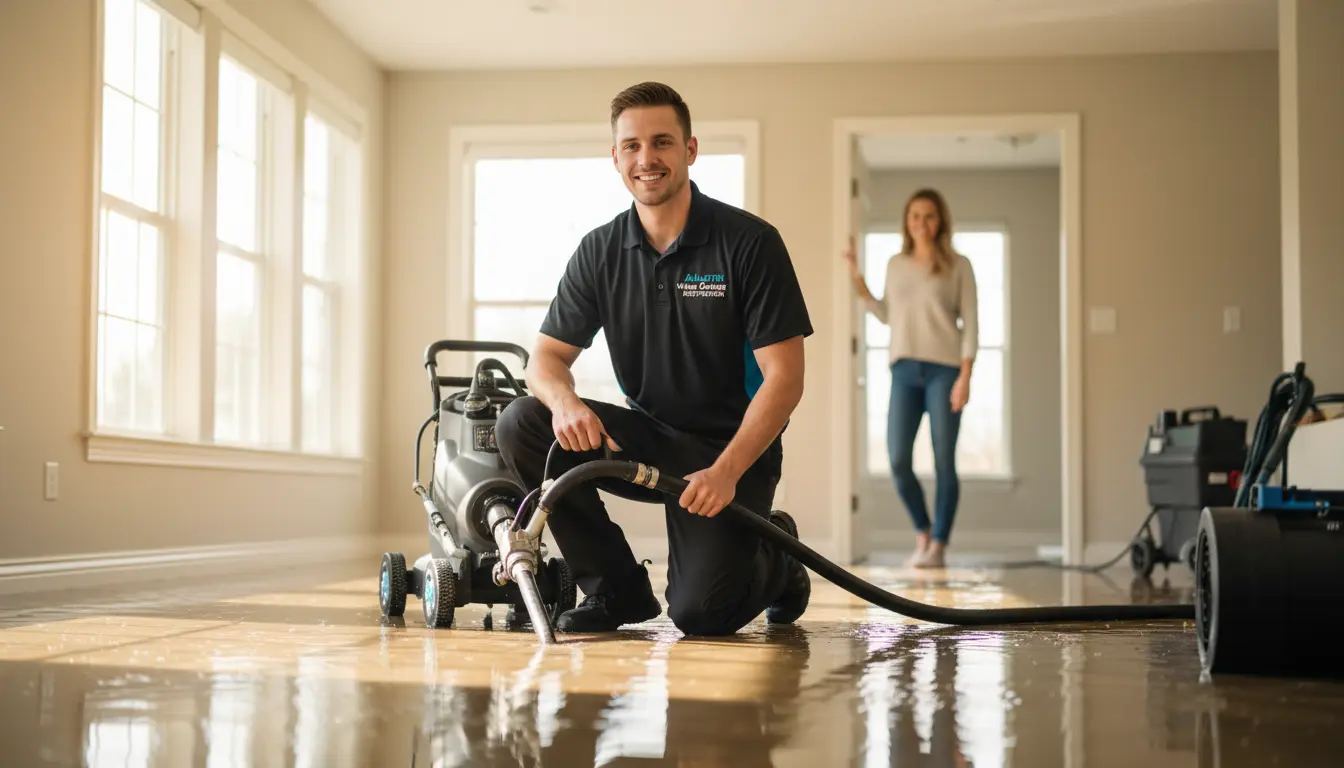
Certified mitigation teams do not guess where the water is; they use psychrometric science to verify it. Attempting to dry a wall with standard house fans is ineffective because it fails to address the “bound moisture” inside the studs and insulation. Our protocol involves:
- Thermal Mapping: Using IR cameras to find cool spots that indicate hidden moisture.
- Engineered Extraction: Deploying truck-mounted units to physically remove standing water. Learn more in our step-by-step guide to emergency water removal.
- Injectidry Systems: Forcing dry air into wall cavities through small, discrete holes to save the drywall.
- LGR Dehumidification: Dropping ambient humidity to force bound moisture out of structural framing.
Performance Impact & Strategy Comparison
Professional restoration can significantly improve the health of your home by preventing secondary rot. The table below illustrates the efficiency of engineered structural drying versus amateur efforts.
| Recovery Factor | Amateur Effort (DIY) | Professional Mitigation | Outcome Improvement |
|---|---|---|---|
| Drying Timeline | 7 to 10 Days | 24 to 48 Hours | 66% Faster Recovery |
| Final Moisture Level | 50% (Saturated) | < 15% (Dry Standard) | Prevents Dry Rot Entirely |
| Mold Proliferation Risk | Extremely High | Eliminated | Secures Indoor Air Quality |
Pricing Variables and Financial Risk
The total investment for North Arlington homes typically ranges from $3 to $7 per square foot. While this is an investment, it is a fraction of the cost of historic reconstruction or mold remediation. According to shocking stats on water damage costs in the DFW area, delaying professional mitigation for just 72 hours can triple your final repair bill as materials move from “salvageable” to “total loss.”
Common Mitigation Mistakes to Avoid
- Painting Over Stains: Covering a water spot without verifying the cavity behind it is dry ensures framing rot behind the new paint.
- Relying on Fans Alone: Household fans simply vaporize moisture into the air, increasing humidity and causing secondary damage to upper cabinetry.
- Hiring Uncertified Contractors: Utilizing laborers who lack specialized moisture-mapping equipment leaves your property vulnerable to hidden rot.
Advanced Frequently Asked Questions
Standard clean-water extraction and drying range from $1,500 to $4,000. However, contaminated Category 3 flooding requiring structural tear-outs and biohazard cleaning will significantly increase the total project cost.
With industrial extraction and LGR dehumidification, the structural drying phase typically concludes within 3 to 5 days. Full reconstruction of drywall and paint can take an additional 1 to 2 weeks.
Yes. If the leak is slow or if the insulation has absorbed the moisture, mold can colonize the back side of the drywall and the wooden studs without ever showing a stain on the front, making the smell the only early indicator.
Do not let structural failure or toxic mold dictate the lifespan of your North Arlington property. If you suspect a hidden leak, fast action with modern equipment is your only defense against compounding financial loss. Please contact our 24/7 rapid response team today for an emergency assessment, and let our certified experts deploy the technology required to save your home.