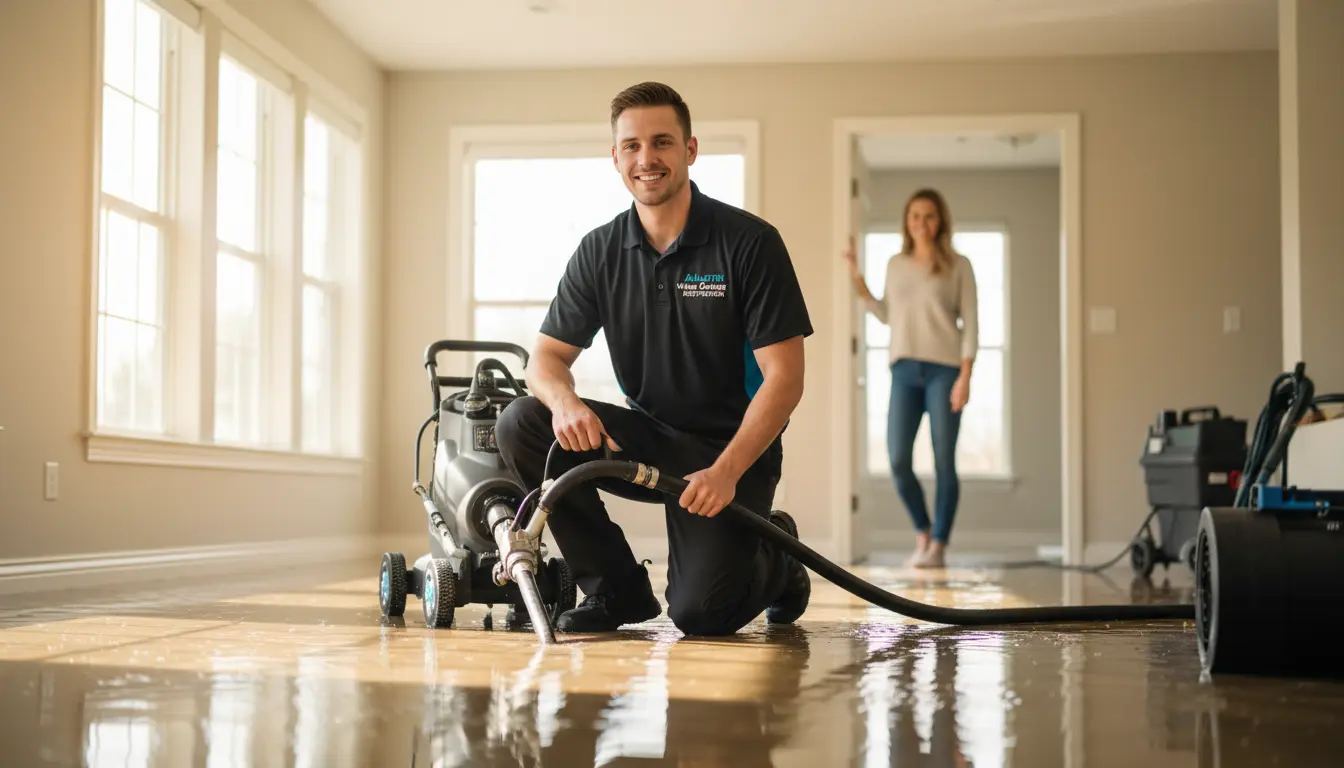
What are the health risks of untreated water damage in Arlington homes? As a homeowner in North Texas, understanding the biological consequences of stagnant moisture is as important as the structural ones. When water breaches your building envelope, it doesn’t just damage drywall and flooring—it initiates a rapid ecological shift. Within 48 hours, untreated moisture becomes a breeding ground for pathogens that can compromise respiratory health and air quality. Identifying hidden water damage early is the only way to intercept these hazards before they become chronic issues.
The Biological Clock: Introduction to Water Damage Risks
Arlington homes are uniquely susceptible to rapid bacterial and fungal colonization due to the city’s humid subtropical climate. With average annual rainfall exceeding 40 inches, the outdoor spore count is naturally high. When internal plumbing fails or storm runoff enters a home, it provides the “missing link” for these spores: sustained moisture. Under these conditions, microorganisms like Stachybotrys chartarum (black mold) and Aspergillus begin to digest organic cellulose in your home’s infrastructure. Understanding the causes of water damage, such as high-pressure pipe bursts or foundation seepage, is essential for maintaining a sterile living environment.
Local Climate Dynamics and Respiratory Hazards
In neighborhoods near the Trinity River or Lake Arlington, the ambient humidity levels are often high enough to keep structural materials damp even after the surface water has been mopped up. This creates a stagnant microclimate within wall cavities. For residents in Arlington Heights and Lake Arlington, this often results in the release of Microbial Volatile Organic Compounds (mVOCs). These are the gases responsible for the “musty” odor of water damage, and inhaling them can lead to persistent headaches, dizziness, and nasal irritation.
Why Engineered Restoration Matters Locally
Professional water damage restoration is critical because household fans cannot reach the “bound moisture” inside your studs and subfloors. If this moisture is not forcefully extracted using industrial psychrometrics, the risk of “Secondary Damage”—damage to upper ceilings and high-end cabinetry from rising water vapor—increases exponentially. Acting quickly ensures that your home returns to its “Dry Standard” before microbial colonies establish deep roots in your home’s framing.
Clinical Signs You Need Immediate Mitigation
- Visual Indicators: Yellow or brown staining on ceilings, peeling paint, or baseboards separating from the drywall.
- Olfactory Cues: Persistent musty or earthy odors that intensify when the HVAC system is inactive.
- Physical Symptoms: Increased allergic reactions, coughing, or skin irritation among occupants when inside the property.
- Measurable Markers: Elevated moisture meter readings above 15% in wooden structural members.
The Professional IICRC Restoration Protocol
To secure a home’s health, professionals follow an engineered sequence designed to clinically dry the environment. This protocol involves more than just extraction; it requires the sterilization of all affected surfaces:
- Psychrometric Assessment: Using thermal imaging to find hidden moisture pockets fueling mold growth.
- HEPA Extraction: Removing standing water while filtering the air to prevent spore dispersal.
- LGR Dehumidification: Dropping relative humidity to levels where mold can no longer survive.
- Botanical Sanitization: Applying EPA-registered biocides to eliminate bacteria like E. coli or Salmonella, often found in floodwater.
Performance Impact & Health Outcomes
Utilizing industrial technology drastically improves the safety profile of a water-damaged home. By reducing the drying timeline, we eliminate the 48-hour window mold needs to colonize. For a deeper look at the financial and structural impact of this speed, review the shocking stats on water damage costs in the DFW area.
| Recovery Metric | Uncertified Effort (DIY) | Professional IICRC Team | Health Improvement |
|---|---|---|---|
| Active Drying Timeline | 72 to 144 Hours | 24 to 48 Hours | 66% Reduction in Exposure |
| Structural Moisture level | > 20% (Rot Level) | < 12% (Dry Standard) | Inhibits Fungal Growth |
| Airborne Spore Count | Elevated/High | Baseline/Low | Prevents Respiratory Distress |
Security, Safety, and Biological Hazards
Water damage restoration involves significant risks, specifically electrical conductivity and biohazard exposure. “Black Water” (Category 3) from storm surges or sewage backups contains hundreds of different bacteria and viruses. Attempting to clean this without specialized Personal Protective Equipment (PPE) is a major health risk. Hiring a professional and certified team ensures that these contaminants are neutralized and physically removed from the building envelope.
Common Restoration Mistakes to Avoid
- The Bleach Myth: Using bleach on porous surfaces kills surface mold but adds water, which feeds the mold roots (hyphae) deeper into the wood.
- Delayed Extraction: Waiting for an insurance adjuster before extracting water ensures that “salvageable” clean water becomes a “hazardous” biohazard.
- Relying on AC: While your AC removes some moisture, it is not designed to pull “bound water” from structural studs.
Frequently Asked Questions
Can untreated water damage make you sick?Yes. Prolonged exposure to damp environments can lead to “Dampness and Mold Hypersensitivity Syndrome,” characterized by respiratory inflammation, fatigue, and neurological symptoms often referred to as “brain fog.”
How long does it take for mold to grow after a leak?In Arlington’s humid climate, mold can begin to colonize building materials in as little as 24 to 48 hours if the moisture is not mechanically removed.
Is it safe to stay in a home with water damage?It depends on the category of water. If the water is from a clean supply line, it may be safe for a short time. However, if the water is from a sewage backup or has sat for more than 48 hours, the air quality risks make it unsafe for children or those with asthma.
Conclusion
In conclusion, the health risks of untreated water damage in Arlington homes are a progressive threat that requires immediate expertise. By understanding the biological timeline of moisture and utilizing professional psychrometric drying, you can protect your family’s health and your home’s value. Don’t let a minor leak become a major health liability—refer to our guide to emergency water removal and contact our 24/7 rapid response team today.