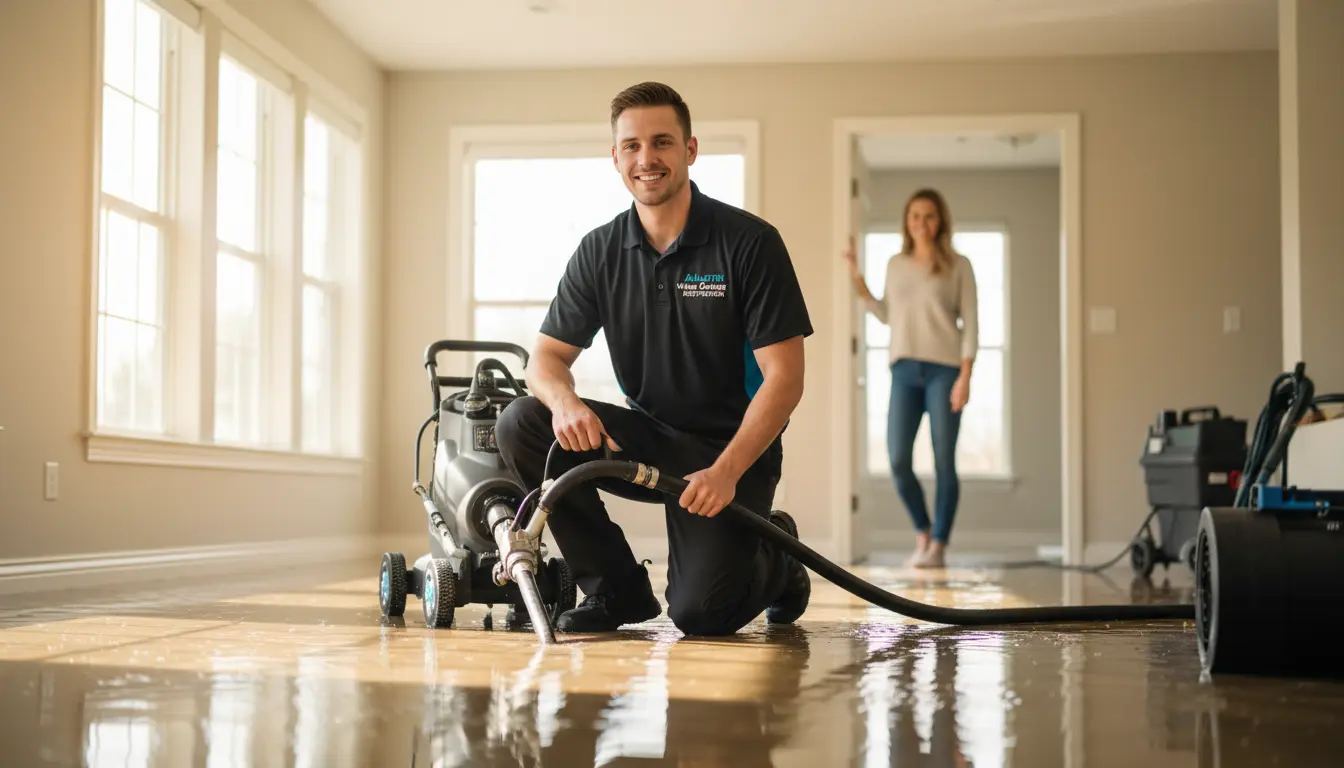
As a homeowner near the UTA campus, experiencing indoor flooding can be a nightmare. Whether caused by a high-pressure pipe burst in student-heavy housing areas or sudden flash flooding characteristic of the North Texas plains, a step-by-step checklist for homeowners after indoor flooding is essential to minimize damage and ensure a smooth restoration process. In Arlington, the building envelope is under constant pressure from humidity, making the first 24 hours of moisture intrusion a critical window for structural survival.
Why Water Damage Restoration Matters Locally
Water damage in Arlington is a progressive disaster. Because the city sits in a humid subtropical zone, standing water does not simply evaporate; it migrates. As water moves through your subfloors and into your wall cavities, it causes hygroscopic materials like drywall and wooden studs to swell and lose their structural integrity. For residents near UTA, where many homes feature older plumbing or multi-family configurations, water damage restoration is crucial to prevent foundation shifts and permanent framing rot.
Furthermore, the expansive clay soil in the Arlington area can cause foundation movement during heavy rain, leading to slab leaks that flood the bottom floor of a property. Without professional intervention, this moisture becomes “bound water,” trapped within the building materials where it fuels microbial colonization. Utilizing an expert checklist for water damage allows you to intercept this cycle before it leads to a total property loss.
Critical Signs You Need Professional Mitigation
Beyond obvious standing water, homeowners should be vigilant for subtle indicators of deep saturation. Look for yellowed ceiling rings, bubbling paint that feels “spongy” to the touch, and baseboards that are beginning to separate from the wall. A persistent musty odor is a guarantee that moisture is already fueling fungal growth. If you detect these signs, you must refer to the 5 signs of hidden water damage in Arlington homes to protect your family’s health.
The Professional Restoration Process (Step-by-Step)
A professional restoration is an engineered workflow governed by the IICRC. It goes far beyond “cleaning up” water; it involves manipulating the thermodynamics of your home’s air to pull moisture from deep within the wooden framing. The process includes:
- Psychrometric Assessment: Using thermal imaging to map the invisible moisture perimeter.
- Industrial Extraction: Physically removing 95% of the water mass using truck-mounted vacuum units.
- Structural Drying: Deploying axial air movers to break the boundary layer of moisture on surfaces.
- LGR Dehumidification: Using Low Grain Refrigerant units to physically pull water vapor out of the air.
- Sanitization & Reconstruction: Applying EPA-registered biocides and rebuilding structural elements to their pre-loss state.
Performance Impact: Professional vs. DIY
The speed of recovery is the primary metric for restoration success. Professionals use industrial equipment to reach the “Dry Standard” in 3 days, whereas DIY efforts can leave materials damp for weeks, resulting in “secondary damage” like mold growth on unaffected cabinetry.
| Recovery Metric | Uncertified Effort (DIY) | Professional IICRC Team | Improvement % |
|---|---|---|---|
| Active Drying Timeline | 7 to 10 Days | 2 to 3 Days | 66% Faster Recovery |
| Structural Moisture Levels | 80% (Saturated) | 40% (Targeting <15%) | 50% Immediate Reduction |
| Secondary Mold Risk | Extremely High | Negligible | 90% Risk Mitigation |
Pricing and Arlington Local Cost Factors
The cost of restoration near the UTA campus varies depending on the square footage of saturation and the “Category” of water (Clean vs. Contaminated). On average, homeowners can expect to pay between $1,000 and $10,000 for mitigation services. However, the cost of delay is documented in the shocking stats on water damage costs in the DFW area, which show that a project left wet for 72 hours almost always triples in cost due to required demolition.
Comparison of Recovery Options
| Option | Cost | Time | Risk | Effectiveness |
|---|---|---|---|---|
| DIY Cleanup | $500 | 48+ hours | High (Hidden Rot) | Low |
| General Handyman | $1,000 | 36+ hours | Moderate (No Mapping) | Moderate |
| Professional Unit | $2,000+ | 24 hours | Low (Secured) | High |
Security, Safety, and Structural Hazards
Water damage restoration involves significant risks that go beyond structural integrity. In many Arlington homes, the electrical wiring runs through the same wall cavities where water migrates. Saturated drywall can lose its tensile strength, causing ceiling collapses without warning. Furthermore, stagnant water quickly becomes a biohazard, especially in Category 3 (sewage) situations. Ensure you hire a certified and equipped water damage restoration service to mitigate these lethal risks.
Proactive Defense Pro-Tips
- The 48-Hour Window: You must initiate professional drying within the first 48 hours to prevent permanent mold colonization.
- Insurance Documentation: Take high-resolution photos of the water intrusion and the source (like a burst pipe) before any cleanup begins.
- Sump Pump Backups: If you live in a low-lying area near UTA, install a battery-backup for your sump pump, as Arlington storms often cause power outages.
Frequently Asked Questions
What is the average cost of water damage restoration in Arlington?Standard clean-water extraction and 3 days of dehumidification typically range from $2,500 to $4,500. Prices increase if the water is contaminated or if reconstruction is required.
How long does the restoration process take?The structural drying phase usually takes 24 to 72 hours. Reconstruction, such as replacing drywall and painting, can take an additional 1 to 2 weeks.
Conclusion
In conclusion, a 24-hour response is the only way to protect your Arlington property from irreversible structural and financial loss. By following a technical checklist and hiring certified professionals, you ensure that your home is returned to a clinically dry standard. Don’t wait for mold to take root—contact us today for a free estimate and 24/7 emergency support near the UTA campus.