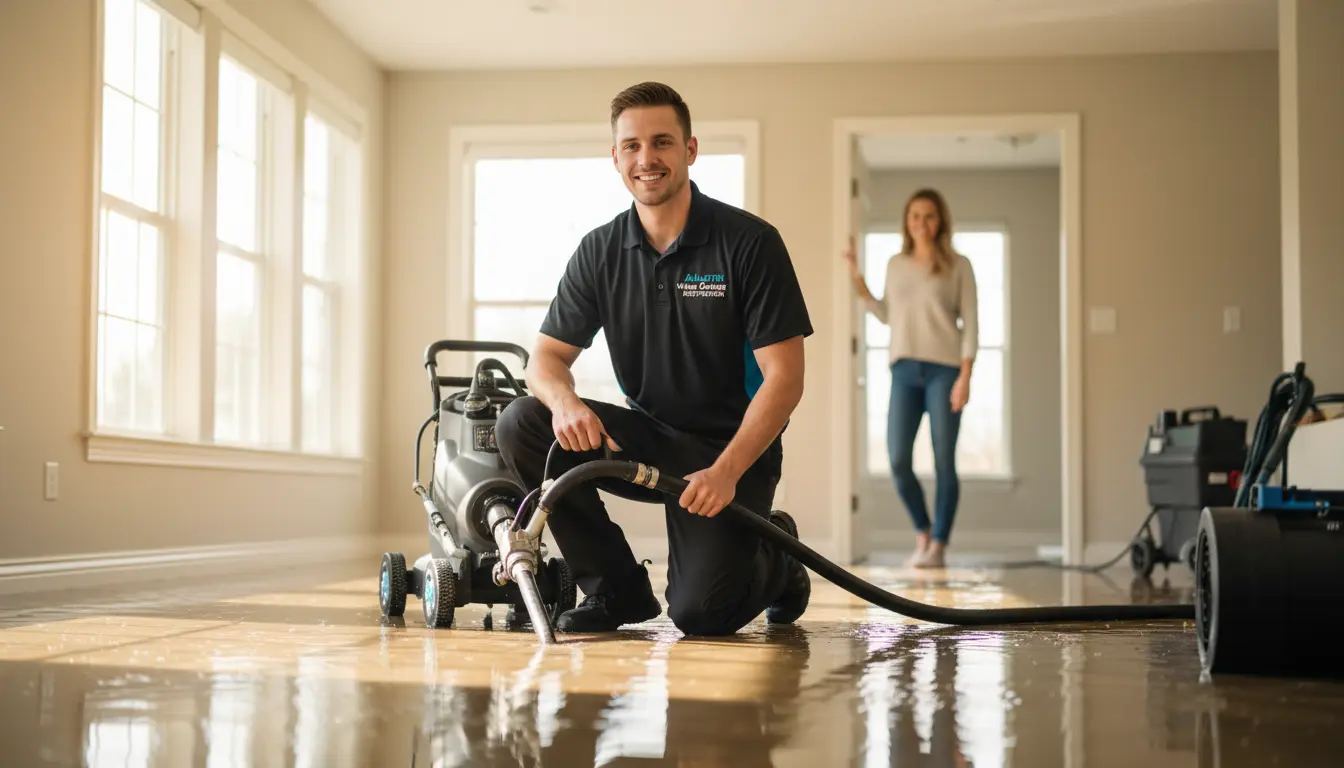
When searching for flood cleanup near me in the Arlington area, property owners aren’t just looking for a cleaning crew; they are looking for a technical intervention. Arlington’s unique position within the DFW metroplex—characterized by the Trinity River basin, aging infrastructure, and expansive clay soils—creates a “perfect storm” for high-velocity water damage. In a humid subtropical environment, flood cleanup isn’t about appearance; it’s about the physics of evaporation and the prevention of structural bio-colonization. This guide provides an exhaustive look at the technical recovery of Arlington properties from catastrophic moisture intrusion.
The Geology of Arlington Flooding: Why Your Home is Vulnerable
To understand flood cleanup in Arlington, you must first understand the local geology. Most of Arlington sits on “Blackland Prairie” soil, which contains high concentrations of smectite clay. When heavy North Texas storms hit, this soil expands with incredible force. This expansion creates hydrostatic pressure that pushes against residential foundations, often causing “weeping” through concrete slabs or complete basement wall failures.
Furthermore, areas near the Johnson Creek corridor or the low-lying zones of West Arlington act as natural collection points for runoff. Unlike the sandy soils of East Texas, our clay doesn’t absorb water quickly. Instead, the water pools and rises, leading to Category 3 “Black Water” intrusions. According to the shocking stats on water damage costs in the DFW area, foundation-related flood events are 40% more expensive to remediate than standard supply-line bursts due to the debris and pathogens carried by ground runoff.
Technical Psychrometrics: The Science of “Thirsty Air”
A professional restoration team uses psychrometrics—the study of gas-vapor mixtures—to salvage your property. Most DIY efforts fail because they focus on surface water. Professionals, however, focus on “bound moisture.” This is water that has reached the cellular level of your wooden studs, floor joists, and drywall.
Thermodynamic Extraction vs. Surface Mopping
To pull bound water out of a home, we must manipulate the indoor environment to create “thirsty air.” By utilizing Low Grain Refrigerant (LGR) dehumidifiers, we drop the specific humidity (Grains Per Pound) of the air to levels much lower than the moisture content inside your walls. This creates a vapor pressure differential, physically forcing the water to leave the wood and enter the air, where it is then condensed and pumped out of the home. Without this scientific balance, your home may look dry, but the internal framing remains at 25% moisture—the exact threshold for the rapid expansion of Stachybotrys (Black Mold).
Categorizing the Disaster: Clean vs. Toxic Intrusions
In the world of professional flood cleanup services, not all water is equal. The IICRC defines three distinct categories that dictate the safety protocols and equipment needed for your Arlington home:
- Category 1 (Clean Water): Originates from a sanitary source like a broken supply line. If addressed within 24 hours, materials are highly salvageable.
- Category 2 (Grey Water): Contains significant contamination (e.g., dishwasher overflow or aquarium leak). This can cause illness if ingested and will degrade into Category 3 within 48 hours.
- Category 3 (Black Water): Highly unsanitary water containing pathogens from sewage, sea water, or rising storm runoff. This requires full biohazard gear and the removal of all porous materials like carpet and drywall.
| Material Type | Salvage Strategy (Cat 1) | Salvage Strategy (Cat 3) | Restoration Complexity |
|---|---|---|---|
| Wallboard/Drywall | In-Place Drying (Injectidry) | Mandatory Removal (Flood Cut) | High (Wicking potential) |
| Hardwood Flooring | Vacuum Mat Drying | Total Replacement | Very High (Cupping risk) |
| Carpet Padding | Industrial Extraction | Biohazard Disposal | Low (Usually replaced) |
The “Flood Cut” and Structural Evaporation
In Arlington homes with significant flooding, the “Flood Cut” is a standard professional maneuver. Drywall is porous and acts as a wick, pulling water vertically up to 24 inches above the floor line. Professionals cut the drywall 12 to 24 inches above the water line to expose the saturated wall cavities and wooden studs. This is especially vital in basement flood restoration where air circulation is naturally limited. By opening the walls, we can place high-velocity air movers directly against the framing, ensuring that the structural skeleton of your home returns to its “Dry Standard” before the new drywall is installed.
Microbial Amplification: The 48-Hour Biological Rule
Arlington’s humidity levels often hover between 60% and 90%. In these conditions, mold spores—which are naturally present in every home—find their ideal breeding ground. Once a porous material like insulation or carpet backing stays wet for 48 hours, microbial amplification begins. This isn’t just a smell; it is a structural hazard. Mold digests the cellulose in your home’s wood and paper, effectively eating your house from the inside. Professional cleanup involves the application of EPA-registered botanical biocides that neutralize these spores on contact, providing a safety barrier that DIY cleaning with bleach cannot achieve.
Why Bleach is a Homeowner’s Worst Enemy
A common mistake in Arlington is using bleach to clean wood after a flood. Bleach is 90% water. While the chlorine kills the mold on the surface, the water in the bleach soaks into the wood, feeding the mold roots (hyphae) deeper into the material. Professionals use surfactants and antimicrobials that break the surface tension of the wood without adding moisture, ensuring a permanent kill of the microbial colony.
The Economics of Restoration: Why Pro is Cheaper
Many homeowners choose DIY to save money, but the long-term financial data suggests otherwise. A professional Ultimate Guide To Water Damage Restoration In Arlington Tx reveals that “hidden” moisture left behind by amateur cleanup results in structural rot that can cost $30,000+ to fix 18 months later. By using thermal imaging to verify the home is dry, you prevent the foundation shifts and secondary rot that plague “DIY-dried” homes in Arlington.
| Recovery Metric | DIY Cleanup | IICRC Professional Team | Outcome Difference |
|---|---|---|---|
| Drying Timeline | 7–10 Days | 2–4 Days | 60% Faster |
| Air Quality Index | Poor (Spores Present) | HEPA Certified Clean | Prevents Respiratory Issues |
| Insurance Approval | High Denial Rate | Data-Backed Claim Support | Full Reimbursement Potential |
Environmental Safety and Electrocution Risks
Flood cleanup carries lethal risks that many Arlington residents underestimate. Water wicking through walls can reach electrical outlets, energizing the metal studs in modern homes or the wet plaster in historic Arlington houses. Before any extraction begins, professional teams use non-contact voltage testers to ensure the site is safe. Furthermore, floodwaters in Arlington often mix with pesticides and herbicides from lawn runoff, creating a chemical cocktail that requires specialized PPE and disposal protocols to handle safely.
Salvaging Textiles: Advanced Carpet and Rug Recovery
Is your carpet a total loss? Not necessarily. If the flood was Category 1, our carpet water restoration technicians use weighted extraction tools (The “Water Claw”) to pull water out of the padding through the carpet fibers. This creates a high-pressure seal that removes 95% of the liquid, allowing the carpet to be saved. In Arlington, where custom area rugs and high-end carpeting are common, this technical extraction saves homeowners thousands of dollars in replacement costs.
Proactive Defense: Hardening Your Home Against the Next Surge
Restoration is only half the battle; prevention is the other. Arlington residents should consider these “Hardening” steps post-restoration:
- Sump Pump with Battery Backup: Because Arlington storms often cause power outages, a standard sump pump is useless during the heaviest rain without a battery backup.
- Grading and Swales: Ensuring the soil around your foundation slopes at a 5% grade away from the building.
- French Drains: Installing subsurface drainage to move water away from the foundation clay before it can exert hydrostatic pressure.
- Water Leak Sensors: Smart home devices that alert your phone the second a pipe or water heater fails.
Advanced FAQ: Technical Answers for Homeowners
Yes. Professionals use a “Dry Standard” by measuring an unaffected area of your home (like a closet upstairs) to find the natural moisture content. We then dry the flooded area until it matches that specific number, ensuring it is at equilibrium with your home’s natural state.
A fan only moves water from the surface into the air. If that moisture isn’t physically removed from the air by a dehumidifier, it will condense on your ceiling and windows, causing “secondary damage” like mold on your high-end furniture and cabinetry.
In most cases, yes. Most Arlington policies cover sudden and accidental damage. Because you have a “Duty to Mitigate” (a legal requirement to stop the damage), insurance companies actually prefer you hire a professional immediately to prevent the claim from growing larger through mold growth.
Do not let a flood determine the lifespan of your Arlington property. In our humid climate, moisture is an active enemy that requires a scientific response. Whether you are dealing with a saturated slab or a flooded second story, our 24/7 technical units are ready to deploy the psychrometric technology needed to secure your home. Contact our dispatch team today for a free moisture-mapping assessment and let our certified experts return your property to a clinically dry standard.