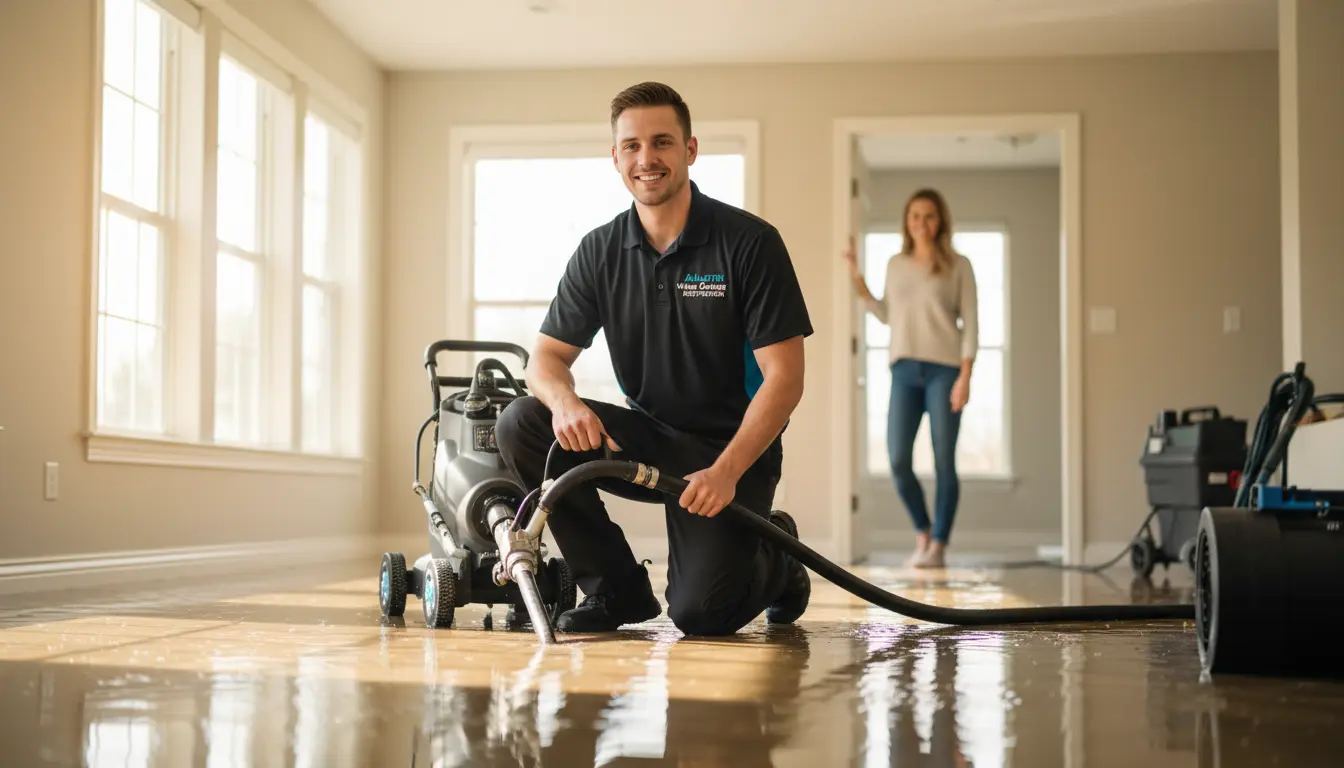
When it comes to water damage restoration in older Arlington houses, professionals have a specific, highly technical process to dry walls and floors without compromising structural integrity. Older properties, particularly those in historic districts or established neighborhoods, often feature dense materials like plaster and lath, solid hardwood, and multi-layered subfloors. These materials react differently to moisture than modern drywall, making it essential to act quickly to prevent permanent warping or rot. In this article, we will explore the engineered methods used to preserve the character and safety of these classic homes.
Why Historic Restoration Dynamics Matter Locally
Older homes in Arlington are uniquely susceptible to the city’s humid subtropical climate. Once moisture permeates a plaster wall or an original oak floor, natural evaporation is almost impossible due to the lack of modern vapor barriers. This trapped moisture quickly becomes a catalyst for structural decay and explosive mold growth. According to shocking statistics on water damage costs in the DFW area, failure to mitigate moisture in older homes can increase restoration expenses by over 300% due to the complexity of matching historic building materials.
Critical Signs of Saturation in Older Properties
Identifying moisture in older Arlington houses requires more than just a visual check. Homeowners must monitor for measured signs like plaster that feels “soft” or crumbling, the sudden onset of earthy odors rising from floorboards, and baseboards detaching from the wall. You must be hyper-aware of hidden water damage signs, as older plumbing often fails slowly behind thick plaster, allowing saturation to reach critical levels before a leak is ever visible.
The Professional Engineered Drying Process
Drying an older home is a study in psychrometrics. Professionals utilize advanced thermodynamic manipulation to save original materials that would otherwise be lost to demolition. The process involves several specialized phases:
- Moisture Mapping: Using thermal imaging and penetrating probes to find water trapped behind lath and plaster.
- Subsurface Extraction: Deploying industrial vacuum units to pull water from deep within old-growth subfloors. Learn how this works in our step-by-step guide to emergency water removal.
- Injectidry Systems: Forcing air into wall cavities through small, discrete holes to dry the interior of the wall without tearing down the plaster.
- LGR Dehumidification: Using Low Grain Refrigerant dehumidifiers to create “thirsty air” that pulls moisture from dense wood and plaster.
Performance Impact & Recovery Metrics
Choosing professional restoration drastically improves the long-term health of an older property. While DIY efforts often leave deep moisture pockets, engineered structural drying secures the building envelope. The following table illustrates the efficiency of professional intervention versus uncertified methods.
| Recovery Strategy | Drying Timeline | Moisture Removal Rate | Structural Outcome |
|---|---|---|---|
| DIY Cleanup | 1 to 2 Weeks | Approx. 30% | High Risk of Dry Rot |
| General Handyman | 4 to 7 Days | Approx. 60% | Likely Secondary Swelling |
| Professional Mitigation | 24 to 72 Hours | 95% + | Materials Salvaged & Secured |
Pricing and Financial Considerations
The cost of restoration in older homes can range significantly based on the density of the materials and the age of the plumbing. Standard rates typically fall between $3 and $10 per square foot. While this is an investment, it is a fraction of the cost required for historic reconstruction. To understand how to manage these logistics, review our checklist for Arlington residents to ensure you document the loss correctly for insurance purposes.
Security, Safety, and Common Mistakes
Water intrusion in older homes introduces immediate lethal hazards. Outdated electrical wiring is extremely vulnerable to moisture, posing severe electrocution and fire risks. Furthermore, stagnant water degrades into a Category 3 biohazard within 48 hours, especially in older crawlspaces. The most common mistake homeowners make is using standard box fans; these only move surface air and fail to address the bound moisture inside the lath and plaster, guaranteeing future mold amplification.
Advanced Frequently Asked Questions
Yes. If addressed within 24 hours using Injectidry systems and high-capacity dehumidifiers, plaster can often be stabilized. However, if the lath beneath the plaster begins to swell and pull the plaster away from its anchor, partial demolition may be necessary.
In older homes with dense materials, the structural drying phase typically concludes within 3 to 5 days. We use moisture meters to verify that every material has returned to its “Dry Standard” before removing equipment.
Most standard policies cover sudden pipe bursts. However, carriers require the homeowner to mitigate the loss immediately. Providing a professional drying log is the best way to prove that you fulfilled your “duty to mitigate” and protect your claim.
Do not let structural decay or toxic mold dictate the lifespan of your classic Arlington property. If you are dealing with a severe leak or sudden flood, fast action with modern equipment is your only defense against compounding financial loss. Please reach out to our 24/7 rapid response team today for a technical assessment and let our certified experts save your home’s historic infrastructure.