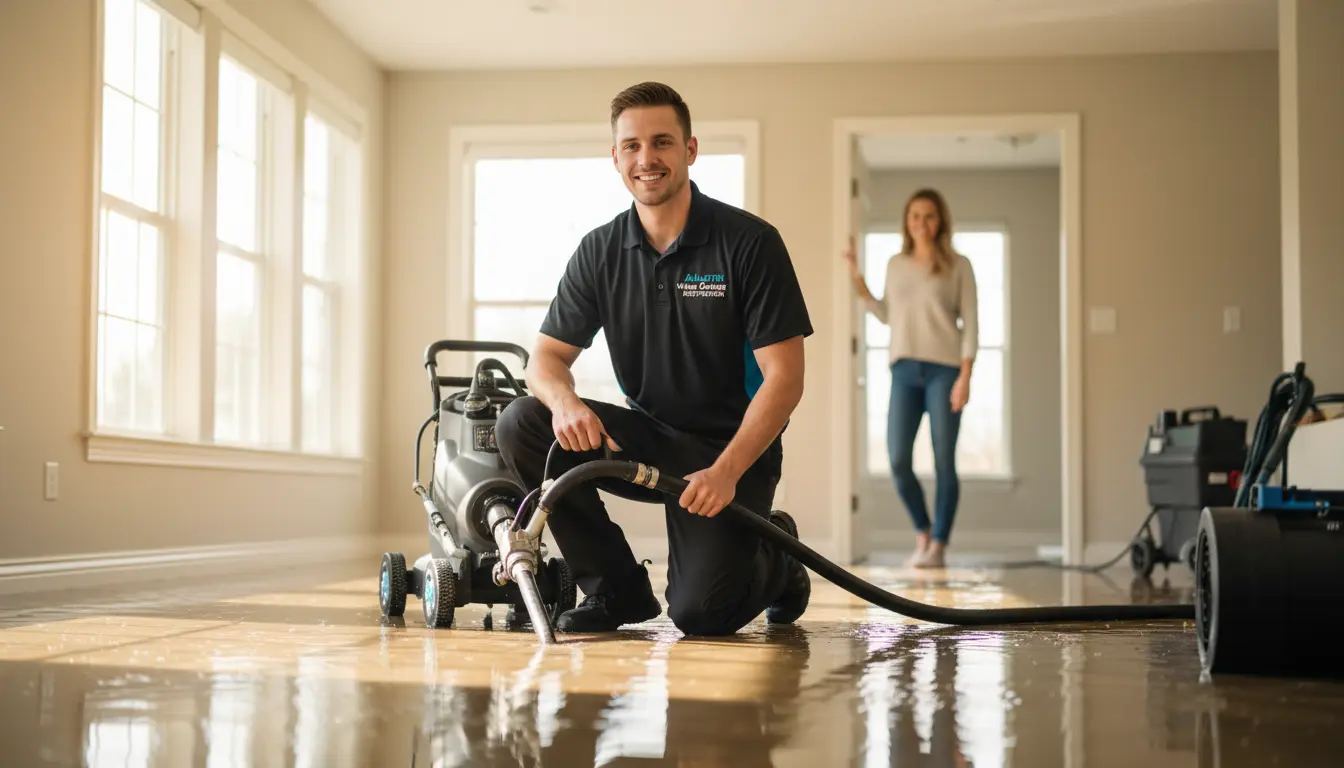
When faced with an unexpected water intrusion event, knowing exactly which questions to ask before hiring a mitigation unit is critical for your property’s survival. Improper extraction protocols can lead to rapid structural degradation, secondary microbial amplification, and severe indoor air quality hazards. Navigating water damage restoration in Arlington, TX requires a deep technical understanding of psychrometrics and how local environmental factors influence drying timelines.
Why Water Damage Restoration Matters Locally
The unique humid subtropical climate of North Texas means that moisture trapped in building envelopes does not evaporate naturally. Sudden water damage can occur due to violent seasonal storms, localized floods, or insidious plumbing failures resulting in hidden water damage. If the ambient indoor humidity remains elevated, hygroscopic materials like drywall and framing wood will continuously absorb vapor, collapsing the structural integrity of your home within days.
Property Risks and Structural Mitigation
Deploying professional restoration teams immediately is the only scientifically proven way to halt progressive rot and mitigate massive financial liabilities. According to local statistics, delaying extraction by even 48 hours exponentially increases the scope of necessary demolition. Rapid intervention stabilizes the environment, salvaging materials that would otherwise require costly tear-outs and total replacement.
Signs You Need Emergency Intervention
Surface moisture is rarely the full story. Common indicators of a deteriorating water class include visible water stains expanding across ceilings, warped hardwood floors resulting from subfloor saturation, and pervasive musty odors indicating active mold colonies. The moment you identify these symptoms, you must secure a certified inspection from a reliable restoration company equipped with thermal imaging technology.
The IICRC-Certified Restoration Process
- Psychrometric Assessment: Utilizing penetrating moisture meters and infrared cameras to map the true migration path of the water.
- Aggressive Water Extraction: Deploying truck-mounted vacuum units to physically remove thousands of gallons of standing water.
- Engineered Dehumidification: Installing Low Grain Refrigerant (LGR) systems to push indoor air below 34 Grains Per Pound (GPP).
- Sanitization & Clearance: Applying EPA-registered botanical biocides to neutralize pathogens before structural rebuilds begin.
Mitigation Performance & Cost Analysis
The cost of emergency mitigation in the DFW metroplex is directly tied to the water category, the extent of the saturation footprint, and the immediate response time. Standard pricing typically ranges from $3 to $10 per square foot, heavily dependent on the severity of the damage and whether controlled demolition is required. Comparing professional strategies against amateur attempts reveals a stark contrast in long-term safety and financial impact.
| Mitigation Strategy | Drying Timeline | Final Moisture Level | Secondary Damage Risk | Total Financial Impact |
|---|---|---|---|---|
| DIY / Handyman Cleanup | 72+ Hours | > 50% (Saturated) | High (Guaranteed Mold) | High (Recurring Repairs) |
| Professional Restoration | 24 – 48 Hours | < 10% (Stabilized) | Low (Environment Secured) | Mitigated ($5,000 Avg) |
Security, Safety, and Biological Hazards
Water intrusions are not just property issues; they are severe health hazards. Standing water rapidly degrades into Category 3 “black water,” posing significant security and safety risks due to raw sewage contamination, active electrical hazards, and aerosolized mold spores. Protecting your family requires a reliable restoration company that enforces strict containment protocols and industry standards during the remediation process.
Pro Tips for Property Preservation
- Act quickly: Disconnect the primary water main immediately to halt the continuous flow of pressurized water.
- Document the damage: Take high-resolution photos and videos before any standing water is extracted to streamline insurance claims.
- Take preventive measures: Insulate exposed piping and install battery-backed sump pumps in below-grade areas to prevent future disasters.
Critical Failures to Avoid
- Delaying professional cleanup, which allows the water category to degrade from clean to highly toxic.
- Using consumer-grade fans instead of dehumidifiers, which simply blows moisture into unaffected areas and causes secondary damage.
- Ignoring the threat of hidden moisture trapped inside wall cavities and beneath subfloors.
Frequently Asked Questions
With industrial LGR dehumidification and high-velocity air movers, the active structural drying phase typically concludes within 3 to 5 days, depending on material porosity.
Costs generally scale between $3 and $10 per square foot. The final invoice is dictated by the volume of water extracted, the category of contamination, and required demolition.
Yes. DIY methods lack the psychrometric monitoring tools necessary to verify that hidden structural framing has returned to its dry standard, inevitably leading to hidden rot.
Do not let trapped moisture dictate the lifespan of your home. If you’re looking for a highly trained water damage restoration company in Arlington, do not wait for the damage to multiply. Contact our certified response unit today for a free estimate and deploy our 24/7 emergency service to secure your property.