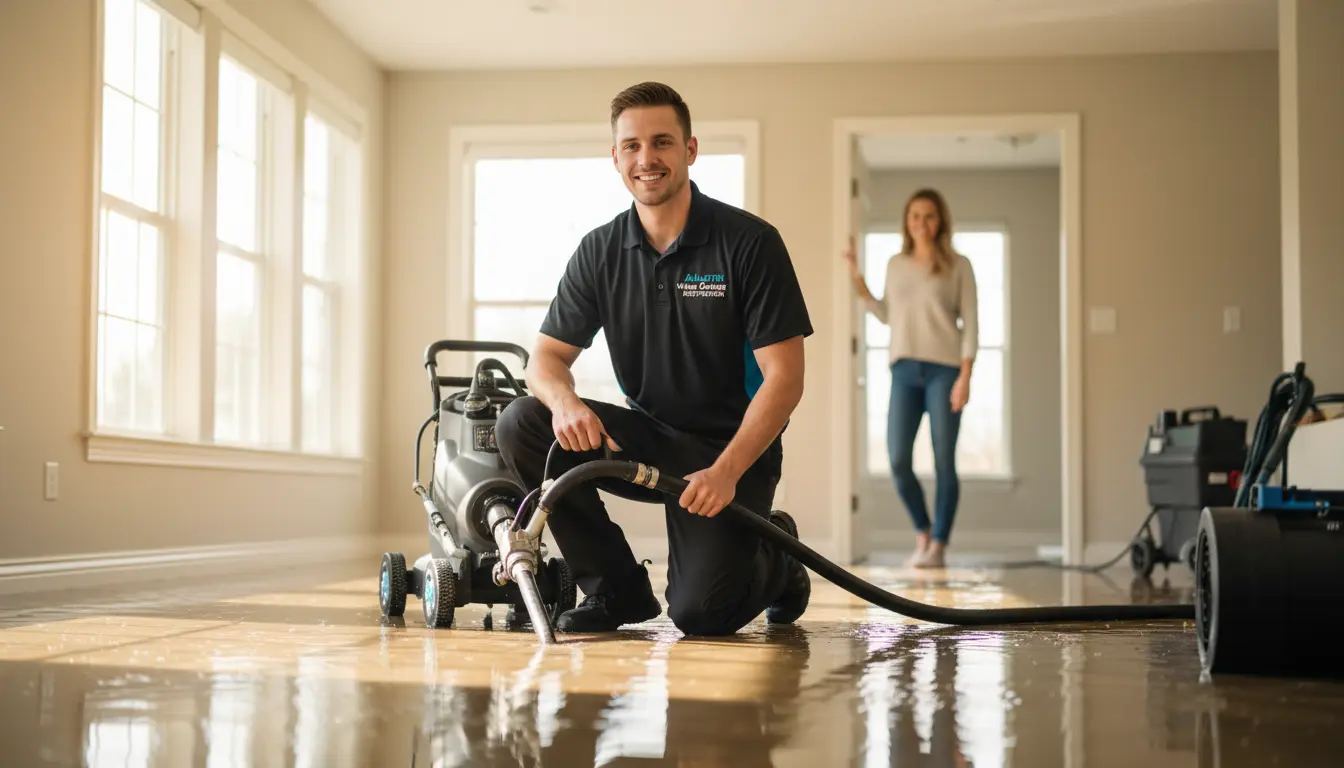
Homeowners residing near Rush Creek are acutely aware of the unique environmental challenges posed by the local topography. The constant threat of recurring water damage is not just about heavy rainfall; it involves rising water tables and immense hydrostatic pressure pushing against residential foundations. Understanding how to permanently stop recurring water damage issues in homes near Rush Creek requires a master-level grasp of structural drying and preventative diagnostics. To trace the origin of these failures, review the top 7 causes of water damage in Texas homes and fixes.
The Science of Recurring Water Damage Locally
Arlington’s highly expansive clay soils act as a massive sponge during the wet season. When the Rush Creek watershed swells, the surrounding soil expands dramatically, exerting thousands of pounds of pressure against concrete slabs and pier-and-beam foundations. This pressure inevitably cracks the building envelope, allowing groundwater to steadily infiltrate your home’s framing and subfloors.
Once inside, the moisture wicks upward into the drywall through capillary action. Because the indoor climate is often tightly sealed for AC efficiency, this trapped moisture cannot evaporate naturally. Instead, it creates a localized, high-humidity microclimate inside the wall cavities, rotting load-bearing wood and serving as a breeding ground for toxic mold. To understand the full technical protocol required to reverse this, consult our ultimate guide to water damage restoration in Arlington, TX.
Critical Signs of Hidden Intrusions
Surface puddles are obvious, but the most dangerous structural threats are invisible to the naked eye. Property owners near the creek must aggressively monitor for subtle red flags. If you notice your hardwood floors beginning to cup, baseboards separating from the drywall, or a persistent earthy odor that won’t go away, microbial amplification has already begun. A professional psychrometric inspection utilizing infrared thermography is mandatory to map the true extent of the hidden saturation.
The Professional IICRC Mitigation Protocol
Tackling recurring creek-related moisture requires advanced, engineered structural drying. Certified mitigation teams do not rely on standard shop-vacuums. The response begins with truck-mounted extraction units capable of recovering over 95% of standing water from specialized carpet padding and subfloors.
The active drying phase relies entirely on manipulated thermodynamics. Technicians deploy Low Grain Refrigerant (LGR) dehumidifiers alongside high-velocity axial air movers. This combination drops the ambient indoor humidity to extreme lows, creating “thirsty air” that literally pulls bound moisture from the center of saturated wooden studs. The process is finalized with the application of EPA-registered botanical biocides to secure the environment against mold spores.
Mitigation Impact and Financial Risks
Choosing to tackle persistent moisture yourself is a high-risk gamble that almost always leads to secondary structural failure. Insurance carriers routinely deny claims if they determine a homeowner used improper, amateur mitigation techniques. The table below outlines the extreme performance differences between DIY attempts and professional, science-backed structural drying.
| Cleanup Strategy | Drying Timeline | Moisture Elimination | Long-Term Structural Risk |
|---|---|---|---|
| DIY (Towels & Box Fans) | 1 to 2 Weeks | Leaves > 20% Moisture | High (Guarantees Dry Rot & Mold) |
| Uncertified Handyman | 4 to 7 Days | Surface Dry Only | Medium (Voids Carrier Guidelines) |
| Professional IICRC Team | 24 to 72 Hours | Extracted to < 10% (Dry Standard) | Low (Saves Framing Materials) |
Security, Safety, and Biohazard Control
Groundwater overflowing from Rush Creek into your home is strictly classified as Category 3 “black water.” It is intrinsically contaminated with soil bacteria, agricultural chemicals, and potentially raw sewage. Exposing your family to this water poses lethal health risks. Attempting to sanitize porous surfaces with household bleach is a widely debunked myth; bleach only removes the stain while leaving the toxic mold roots entirely intact.
Pro Tips for Property Preservation
To break the cycle of recurring damage, you must address both the interior saturation and the exterior vulnerabilities. Ensure your exterior grading slopes away from the foundation at a minimum drop of 6 inches over the first 10 feet. Install battery-backed sump pumps in crawlspaces and ensure your gutters are discharging water far from the slab. If water does breach your home, follow the what to do after water damage Arlington residents checklist to ensure you do not inadvertently void your insurance coverage.
Advanced Frequently Asked Questions
With industrial extraction and LGR dehumidification, the active structural drying phase typically concludes within 3 to 5 days. However, severe Category 3 creek flooding may extend this timeline if contaminated drywall requires controlled demolition.
Costs scale dynamically based on the volume of water and elapsed time. Rapid mitigation for clean water averages $3 to $7 per square foot. If the delay forces technicians to execute tear-outs and biohazard cleaning, the invoice will heavily inflate.
No. Standard policies cover sudden internal failures, such as a burst pipe. Water that enters the home from an exterior body of water (like Rush Creek) requires a specific flood insurance policy through the National Flood Insurance Program (NFIP).
Do not allow the cycle of recurring moisture to systematically destroy the structural integrity of your property. If your home has been compromised by rising water or sudden plumbing failures, immediate action is your only defense against compounding financial loss. Reach out to our 24/7 rapid response dispatch via our contact us page for an expert psychrometric assessment, and let our certified team secure your home.