Arlington, Texas is no stranger to severe weather. As the warm Gulf moisture collides with cold fronts moving across the plains, homeowners face sudden and violent storm seasons. When torrential downpours hit, inadequate exterior drainage can quickly result in catastrophic structural flooding. Securing your property requires more than just boarding up windows; it demands a technical understanding of hydrostatic pressure and how water exploits vulnerabilities in your building envelope.
The Mechanics of Storm-Driven Water Damage
The highly expansive clay soils in the Dallas-Fort Worth metroplex absorb massive amounts of water during storms. As this soil expands, it exerts immense hydrostatic pressure against your home’s foundation, forcing groundwater through microscopic cracks in the concrete. Once inside, this moisture rapidly wicks into porous materials like drywall, insulation, and baseboards, where the high indoor humidity prevents natural evaporation. Review our top tips to protect your home from storms in Arlington, TX to proactively harden your property against these extreme environmental forces.
Identifying Hidden Saturation
Surface water is often just the tip of the iceberg following a severe weather event. Hidden moisture migration is the primary cause of long-term structural decay. You must aggressively inspect your home for subtle signs of intrusion, such as localized humidity spikes, sudden earthy odors, or doors that abruptly begin sticking in their frames. If you notice the baseboards separating or drywall tape bubbling, moisture has already compromised the wall cavity.
The Professional Mitigation Protocol
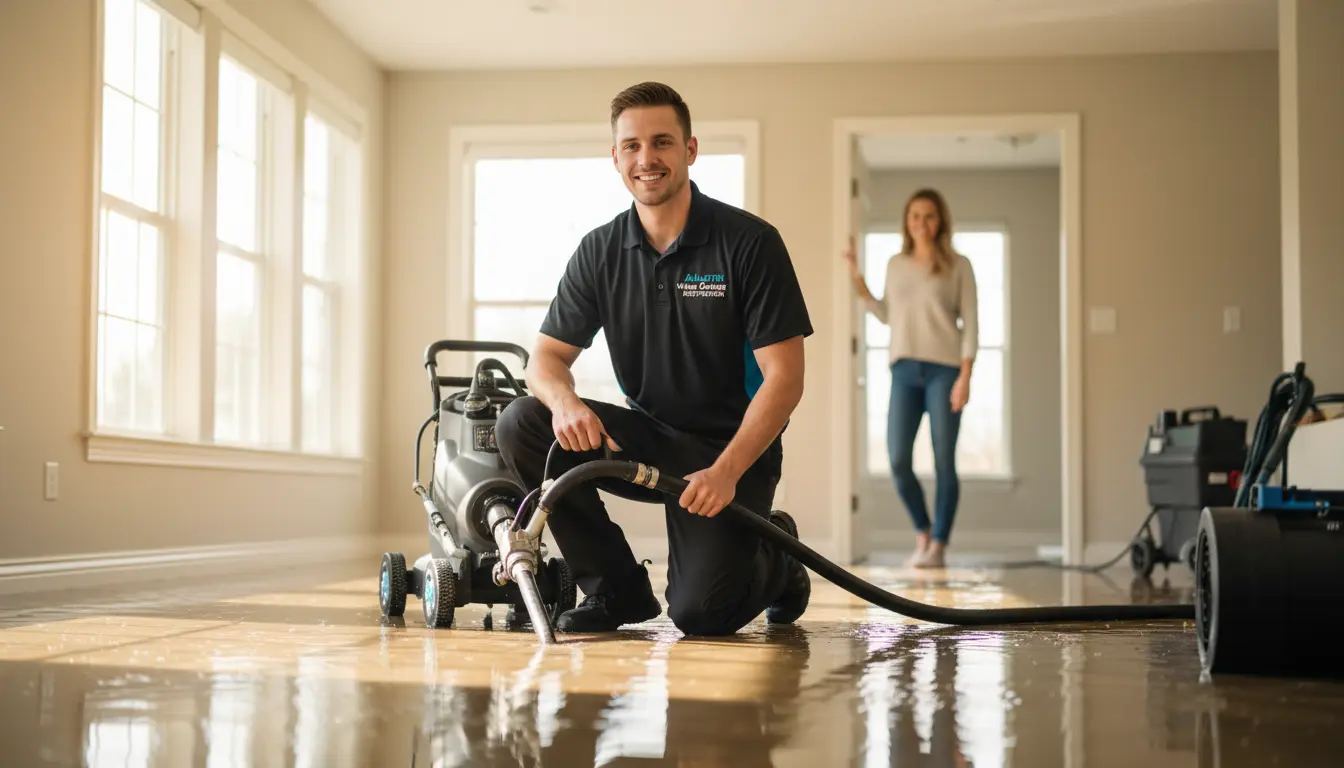
When storm water breeches your home, standard wet-vacuums are entirely ineffective at reversing the damage. Professional mitigation teams follow strict, science-backed psychrometric processes to restore your environment. This protocol involves initial thermal imaging to map the exact perimeter of the moisture migration. Learning exactly how to prevent flood damage in your Arlington property is vital, but when breaches occur, immediate professional intervention is required to extract the standing water before secondary rot begins.
Mitigation Strategy & Performance Comparison
Attempting to handle severe storm flooding yourself drastically alters the recovery timeline and heavily inflates the final financial outcome of the disaster. The consolidated data table below highlights the extreme differences in performance between amateur cleanup and engineered structural drying.
| Recovery Strategy | Extraction Power | Average Drying Timeline | Structural Risk Profile |
|---|---|---|---|
| DIY Cleanup (Fans & Towels) | Negligible | 1 to 2 Weeks | High (Guaranteed Mold & Rot) |
| Uncertified Handyman | Moderate (Shop-Vac) | 4 to 7 Days | Medium (Risk of Secondary Swelling) |
| Professional IICRC Team | Extreme (Truck-Mounted) | 24 to 48 Hours | Low (Environment Stabilized) |
Security, Safety, and Biological Hazards
Stormwater that enters your home from the outside is classified as Category 3 “black water.” This water is inherently contaminated with soil bacteria, agricultural runoff, and raw sewage pathogens. If this water sits for more than 48 hours, it becomes a breeding ground for toxic molds. Deploying a certified emergency water removal team immediately ensures that your home is not just visually dried, but chemically sanitized using EPA-registered botanical biocides.
Pre-Storm Preparation and Pro Tips
The golden rule of property preservation is rapid response. Your first action during a flood should always be shutting off the main electrical breakers to the affected zones to prevent lethal shock hazards. Ensure your gutters are completely clear of debris before storm season hits, and test your sump pump by pouring a bucket of water into the basin. If the worst happens, you must document the entire scene with photos for your insurance adjuster before the water is extracted.
Common Mitigation Mistakes to Avoid
- Delaying the extraction: Waiting for the storm to fully pass before addressing indoor standing water allows mold to permanently colonize the property.
- Relying on ceiling fans: Standard fans simply vaporize the water into the air, drastically increasing indoor humidity and causing upper-level drywall damage.
- Painting over water stains: Attempting to cover up a leak without verifying the wall cavity behind it has returned to its dry standard ensures hidden framing rot.
- Ignoring insurance protocols: Failing to immediately log your loss can result in denied coverage. Review the what to do after water damage Arlington residents checklist to ensure compliance.
Advanced Frequently Asked Questions
The active extraction and Low Grain Refrigerant (LGR) dehumidification phase typically concludes within 3 to 5 days. However, if structural tear-out and reconstruction are required, the full timeline can span a few weeks.
Costs scale dynamically based on the severity of the damage. A standard clean-water pipe burst might range from $1,500 to $3,000, while severe Category 3 storm flooding requiring extensive demolition can exceed $7,000.
Typically, no. Standard homeowners policies cover sudden internal failures, like a burst pipe. Floodwater that enters the home from the outside requires a specific flood insurance policy through the National Flood Insurance Program (NFIP).
If the carpet was saturated by clean water and extracted within 24 hours, it can often be salvaged. However, if it was saturated by storm runoff (Category 3), the carpet and pad must be removed and discarded by law due to biohazard contamination.
Do not wait for structural failure or toxic mold to compromise the safety of your home. If you are dealing with storm-driven flooding or a severe leak, fast action is your only defense. Contact our certified 24/7 emergency response experts today to deploy the heavy-duty extraction equipment required to save your property.