When a pipe bursts or a sudden flash flood infiltrates your property, panic often drives poor decision-making. Homeowners searching for “what are the top mistakes homeowners make after water damage near me” are already realizing that improper cleanup exponentially increases financial losses. In Arlington’s humid subtropical climate, errors in the first 24 hours guarantee irreversible structural degradation.
Surface water extraction is merely the first step of a highly technical process. Failing to understand psychrometrics—the science of drying air and materials—allows moisture to remain trapped inside wall cavities and subfloors. By acting decisively and avoiding amateur mitigation strategies, property owners can preserve their home’s framing and prevent the catastrophic onset of toxic microbial growth.
The Most Destructive Homeowner Mistakes
The single most catastrophic error Arlington homeowners make is waiting for an insurance adjuster before extracting standing water. Clean water (Category 1) rapidly degrades into a Category 3 biohazard within 48 hours as it mixes with soil, drywall chemicals, and organic matter. This delay ensures the total loss of carpeting, padding, and baseboards that could have otherwise been salvaged.
Another major pitfall is relying on consumer-grade equipment. Placing standard box fans in a flooded room does not extract moisture; it simply vaporizes it into the air. This forces the relative humidity to skyrocket, pushing moisture into previously dry drywall and causing secondary swelling in upper-level cabinetry. To ensure compliance with insurance carriers, always follow a verified what to do after water damage Arlington residents checklist.
Ignoring the Hidden Moisture Migration
Water always follows the path of least resistance. It migrates beneath floating floors, wicks vertically up drywall, and saturates the wooden sill plates of your home’s framing. Assuming a room is dry simply because the carpet feels dry to the touch is a dangerous miscalculation. This hidden moisture creates the perfect incubator for Stachybotrys chartarum (black mold).
You must learn to recognize the subtle indicators of trapped water before structural failure occurs. Unexplained spikes in indoor humidity, baseboards pulling away from the wall, and persistent earthy odors are primary red flags. Familiarize yourself with the 5 signs of hidden water damage in Arlington homes to catch these issues before they require costly demolition.
The Science of Professional Restoration
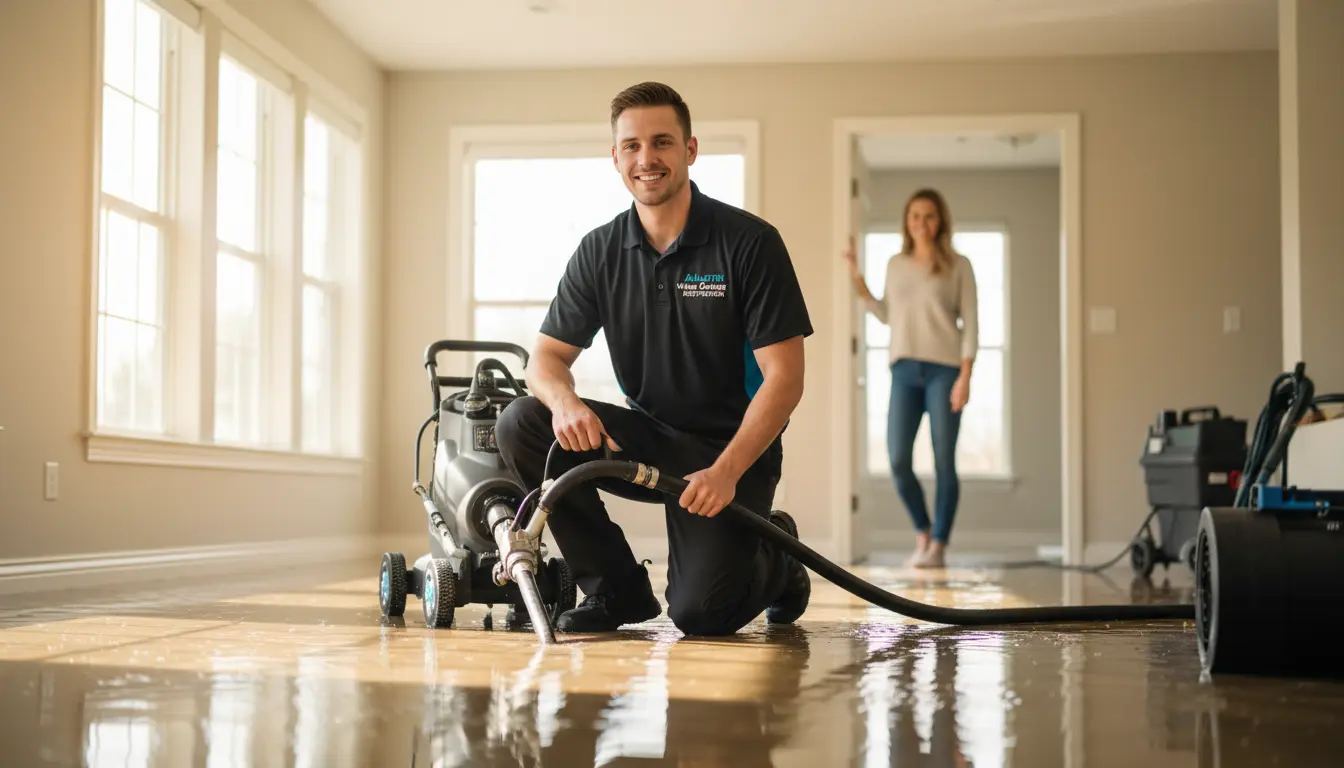
Certified mitigation goes far beyond basic cleanup. Our rapid-response teams adhere strictly to the IICRC S500 standard, utilizing thermal imaging cameras and penetrating moisture meters to map the exact perimeter of the intrusion. Once identified, truck-mounted extraction units are deployed to physically remove the bulk of the standing water.
The active drying phase relies on engineered dehumidification. Technicians strategically place Low Grain Refrigerant (LGR) dehumidifiers to drop the indoor air below 34 Grains Per Pound (GPP). This creates “thirsty air” that forcefully pulls bound moisture from saturated studs and drywall. Discover how this science is applied in our step-by-step guide to emergency water removal in Arlington.
Mitigation Impact and Financial Risks
Choosing to tackle water damage yourself is a high-risk gamble. Insurance providers routinely deny secondary mold claims if they determine the homeowner failed to deploy professional mitigation promptly. The table below outlines the extreme performance differences and financial risks associated with amateur versus professional cleanup.
| Cleanup Strategy | Drying Timeline | Mold Risk Profile | Financial Effectiveness |
|---|---|---|---|
| DIY (Towels & Box Fans) | 1 to 2 Weeks | Extremely High | Low (Leads to Demolition) |
| Uncertified Handyman | 4 to 7 Days | Medium | Medium (Voids Carrier Guidelines) |
| Professional IICRC Team | 24 to 72 Hours | Eliminated | High (Saves Structural Materials) |
Security, Safety, and Biohazard Control
Water intrusion creates an immediate hazard zone. Submerged electrical outlets pose lethal shock risks, while saturated drywall loses its load-bearing integrity and can collapse. Furthermore, attempting to kill mold roots on porous surfaces with household bleach is entirely ineffective and leaves toxic spores behind. Professionals secure the environment by shutting off main power grids and utilizing EPA-registered botanical sanitizers to restore indoor air quality.
Advanced Frequently Asked Questions
With industrial extraction and LGR dehumidification, the active structural drying phase typically concludes within 3 to 5 days. Highly porous materials or severe Category 3 flooding may extend this timeline if controlled demolition is required.
Costs scale dynamically based on the saturation footprint. Standard clean-water mitigation ranges from $3 to $7 per square foot. However, delaying the call forces technicians to execute tear-outs and biohazard cleaning, which heavily inflates the final invoice.
Most standard policies cover sudden and accidental water intrusions. However, they strictly require the homeowner to mitigate further damage immediately. Attempting a DIY cleanup that results in mold will likely cause your secondary claim to be denied.
Do not let amateur mistakes dictate the lifespan of your property or jeopardize your family’s respiratory health. If you are dealing with a severe leak or sudden flooding, fast action is your only defense against compounding financial losses. Reach out to our 24/7 emergency dispatch today via our contact us page for a free estimate, and let our certified experts secure your home.