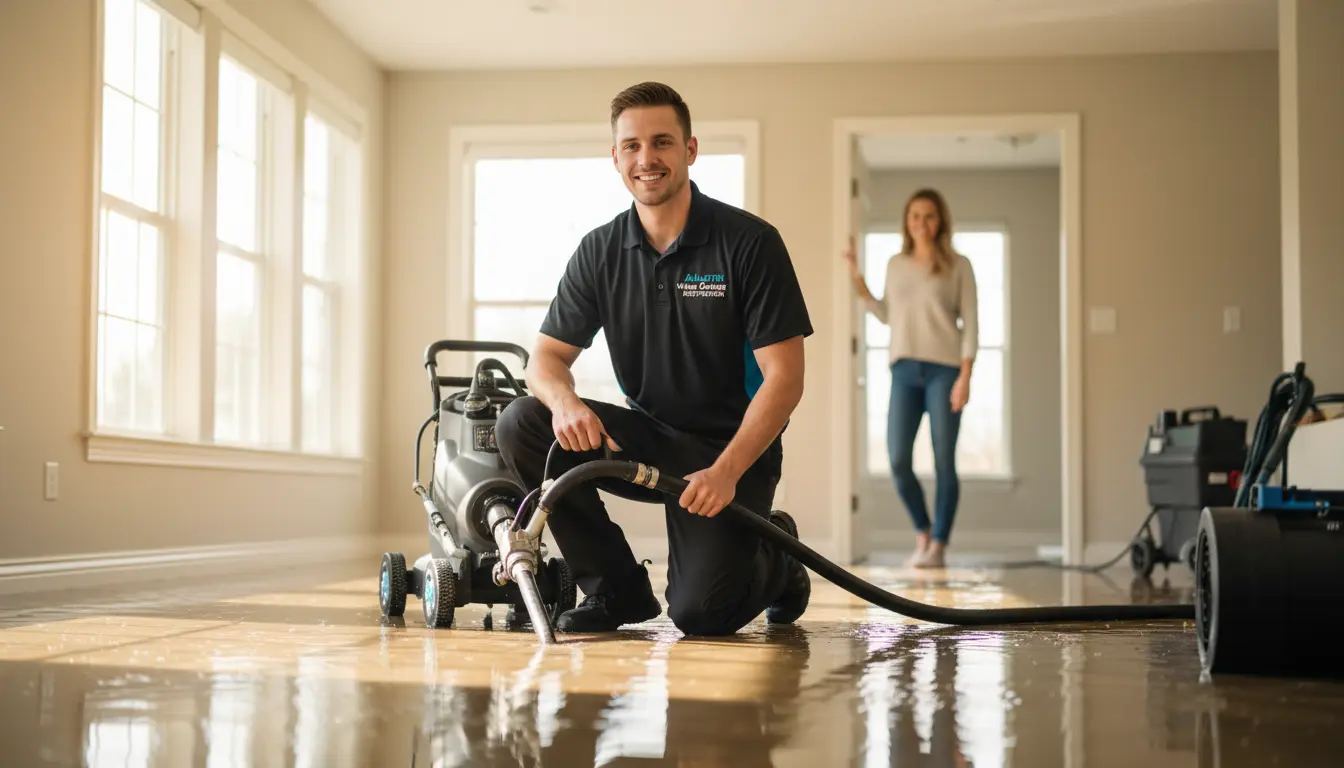
Full water damage restoration in Arlington, TX takes a careful, technical approach to stop damage before it spreads. When storms, burst pipes, or a broken appliance flood your property, water soaks fast into drywall, subflooring, and wood framing. Whether you’re in North Arlington, South Arlington, or Downtown, hiring a certified team isn’t just about mopping up standing water — it’s about protecting your home’s structure and indoor air quality.
Why Water Damage Restoration Matters Locally
North Texas humidity means wet materials won’t dry out on their own — they need mechanical help. Left alone, that trapped moisture leads to dry rot, mold, and insurance headaches. Read our ultimate guide to water damage restoration in Arlington, TX to see why local humidity speeds up structural damage, and how fast you need to act.
Signs You Need Emergency Structural Mitigation
What you see on the surface is only part of the problem. Water often hides beneath floating floors or wicks up behind baseboards, quietly damaging the subfloor and drywall. Watch for:
- Hardwood floors that suddenly cup or warp
- Drywall tape that starts bubbling
- A persistent earthy smell — a sign of active mold growth
Learn more in our 5 signs of hidden water damage in Arlington homes guide, so you can catch problems before they cause real structural damage.
The Professional IICRC Restoration Process
Certified restoration follows a proven process, not guesswork:
- Map the damage: Thermal imaging shows exactly where water spread, without tearing into walls first.
- Remove standing water: Truck-mounted units pull out thousands of gallons from carpets and padding.
- Dry the structure: LGR dehumidifiers and high-powered air movers force hidden moisture out of drywall and framing.
See the full technical breakdown in our step-by-step guide to emergency water removal in Arlington.
Mitigation Impact & Strategy Comparison
Hiring a professional cuts drying time, lowers repair costs by up to 30%, and nearly eliminates mold risk. Here’s how the options stack up:
| Mitigation Method | Drying Timeline | Moisture Detection | Effectiveness & Safety Risk |
|---|---|---|---|
| DIY Cleanup (Towels/Wet-Vac) | 1 to 2 Weeks | Visual Guesswork | Low Effectiveness / High Mold Risk |
| Uncertified Handyman Services | 4 to 7 Days | Basic Surface Meters | Medium / Voids Insurance Standards |
| Professional IICRC Extraction | 2 to 4 Days | Thermal Imaging / Deep Probes | High / Property Secured & Sanitized |
Pricing Variables and Cost Factors
Pricing is based on square footage, how contaminated the water is, and how far it spread. Acting fast saves money — a quick professional response often means your carpet, padding, and drywall can be saved instead of torn out and replaced. DIY cleanup or an uncertified contractor usually can’t reach deep moisture pockets, which raises your risk of costly secondary damage.
Security, Safety, and Biological Hazards
Standing water can turn hazardous fast. Within days it may carry sewage, mold spores, or pose an electrical shock risk. A thorough restoration includes:
- Full odor elimination, not just masking the smell
- Careful salvage of personal property
- Sanitizing that makes the space safe to breathe in, not just dry to the eye
Pro Tips for Property Preservation
Try to respond within the first 24 to 48 hours — that’s your window before clean water turns into a bigger problem. Being proactive helps too. Learn how to prevent flood damage in your Arlington property by checking your sump pump, grading your yard away from the foundation, and insulating exposed pipes before winter.
Common Mitigation Mistakes to Avoid
- Waiting too long: Delaying water extraction by even a day or two raises your mold risk and can affect your insurance claim.
- Using box fans instead of real dehumidifiers: Fans just push moisture into the air, which can damage cabinetry and ceilings above.
- Trusting a “dry” feel: A floor can feel dry on top while the pad underneath stays fully soaked.
- Hiring uncertified contractors: Workers who skip IICRC S500 standards can leave your home structurally weak long-term.
Frequently Asked Questions
Costs depend on severity. A minor clean-water leak might run $1,500. A major sewage backup that needs demolition and full sanitizing can top $6,000.
Extraction and drying usually take 3 to 5 days. If walls, baseboards, or flooring need to be rebuilt, the full job can stretch to a few weeks.
If the damage is limited to one room with clean water, you can often stay while we seal off the area. For sewage backups or damage affecting your HVAC system, temporary relocation is usually the safer choice.
Most policies cover sudden damage, like a burst pipe or an appliance leak. Damage from long-term neglect or rising exterior floodwater usually needs a separate flood insurance policy.
Don’t wait until your home’s structure is at risk. If you’re facing serious water damage, contact our rapid response team now for a free assessment and 24/7 emergency water extraction.