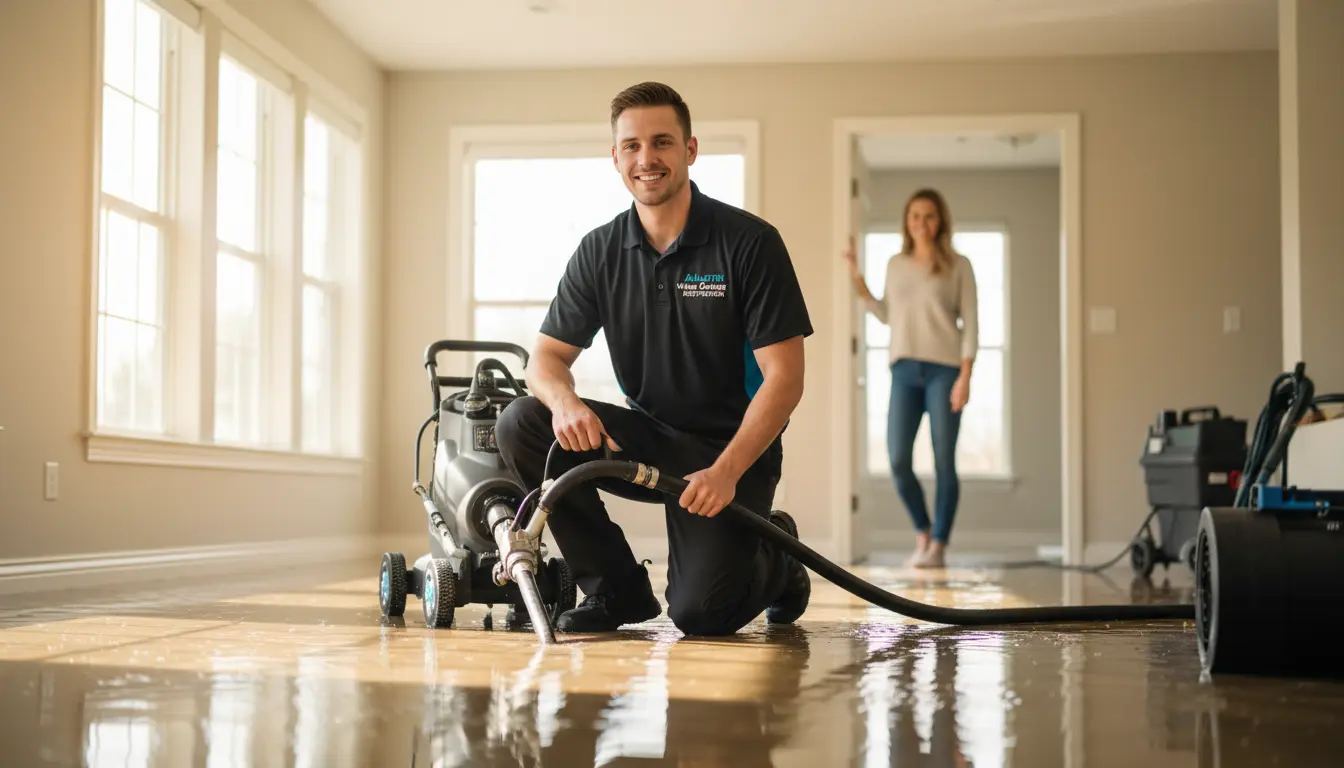
Water damage can be a devastating issue for homeowners in Arlington, Texas, with the potential to cause catastrophic damage to premium hardwood floors. Hardwood is naturally hygroscopic, meaning it acts like a sponge, expanding and contracting as it absorbs moisture from its environment. To successfully fix water-damaged hardwood floors in Arlington properties, it is essential to bypass surface drying methods and aggressively target the trapped moisture beneath the planks.
Why Hardwood Floor Mitigation Matters Locally
In Arlington’s humid subtropical climate, water trapped beneath tightly locked hardwood planks cannot naturally evaporate. As the wood absorbs this trapped moisture from the subfloor, the edges of the planks expand and push against one another, creating a rippled effect known as “cupping.” If the humidity imbalance is not rapidly corrected, the planks will buckle entirely, detaching from the subfloor and requiring a total, costly replacement. To understand the science behind this environmental threat, review our ultimate guide to water damage restoration in Arlington, TX.
Signs You Need Specialized Floor Restoration
Visible puddles are obvious, but the real danger lies in what you cannot see. Moisture migrating beneath the floorboards will begin to warp the wood within 24 to 48 hours. Key indicators of hidden saturation include planks that feel spongy to walk on, nails popping out of the wood, and a persistent musty odor rising from the floor joints. If you notice any of these symptoms, you must consult the 5 signs of hidden water damage in Arlington homes and request a thermal imaging inspection immediately.
The Professional Hardwood Restoration Process
Standard wet-vacuums cannot pull water from beneath a locked hardwood floor. Certified mitigation teams deploy highly specialized “Injectidry” systems and wood floor drying mats. These heavy-duty mats are taped directly over the saturated planks and connected to high-pressure vacuum systems that physically suck the trapped water up through the microscopic seams of the wood.
Simultaneously, Low Grain Refrigerant (LGR) dehumidifiers are used to drop the ambient room humidity, safely bringing the wood back to its original equilibrium moisture content. If executed quickly, this advanced process can save the floor, requiring only minor hardwood floor refinishing rather than a total tear-out.
Performance Impact and Strategy Comparison
Choosing to tackle wet hardwood yourself is the leading cause of permanent floor failure. The consolidated data table below highlights the extreme differences in performance, financial risk, and structural safety between amateur cleanup and engineered hardwood drying.
| Recovery Strategy | Drying Methodology | Mold Risk Profile | Long-Term Outcome |
|---|---|---|---|
| DIY (Towels & Box Fans) | Surface Evaporation Only | Extremely High (Under Floor) | Guarantees Total Floor Replacement |
| Uncertified Handyman | Standard Shop-Vacs | High (Subfloor Remains Wet) | Severe Cupping and Buckling |
| Professional IICRC Team | Vacuum Mat Systems & LGRs | Eliminated | Floor Saved / Minimizes Tear-Outs |
Security, Safety, and Biological Hazards
Trapped moisture beneath a hardwood floor creates the perfect dark, damp incubator for toxic mold amplification. Within 48 hours, Stachybotrys chartarum (black mold) can begin colonizing the wooden subfloor. Attempting to dry the floor slowly with ceiling fans allows these spores to multiply, eventually aerosolizing into your breathable living space through the floor joints. Professional extraction ensures that the subfloor is dried rapidly, eliminating the threat of a biological hazard in your home.
Pro Tips and Common Mitigation Mistakes
The most catastrophic mistake homeowners make is turning up the home’s heating system in an attempt to “bake” the floor dry. Extreme heat causes the surface of the hardwood to dry too quickly, permanently cracking and splintering the wood, while the subfloor underneath remains soaking wet.
Instead, your first action must be shutting off the water source and contacting an emergency water removal unit within the first 12 to 24 hours. Never place plastic tarps over wet wood, as this traps the moisture and accelerates rot.
Advanced Frequently Asked Questions
Yes. If professional drying mats and LGR dehumidifiers are deployed quickly, the wood will release its bound moisture. Once the floor returns to its standard equilibrium moisture content (usually between 6% and 9%), the planks will often flatten out naturally.
Specialized hardwood drying is highly technical. Standard mitigation can range from $4 to $8 per square foot. However, this is significantly cheaper than the $10 to $20+ per square foot required to completely demolish, dispose of, and replace premium hardwood floors.
If the damage was caused by a sudden, accidental event like a burst supply line or ruptured water heater, standard policies typically cover the drying process and any necessary refinishing to return the floor to its pre-loss condition.
Do not let trapped water permanently destroy the value of your premium flooring. If your hardwood floors have been compromised by a leak or flood, fast action and specialized equipment are your only defenses. Contact our 24/7 rapid response dispatch today for a free thermal imaging assessment, and let our certified technicians secure your investment.