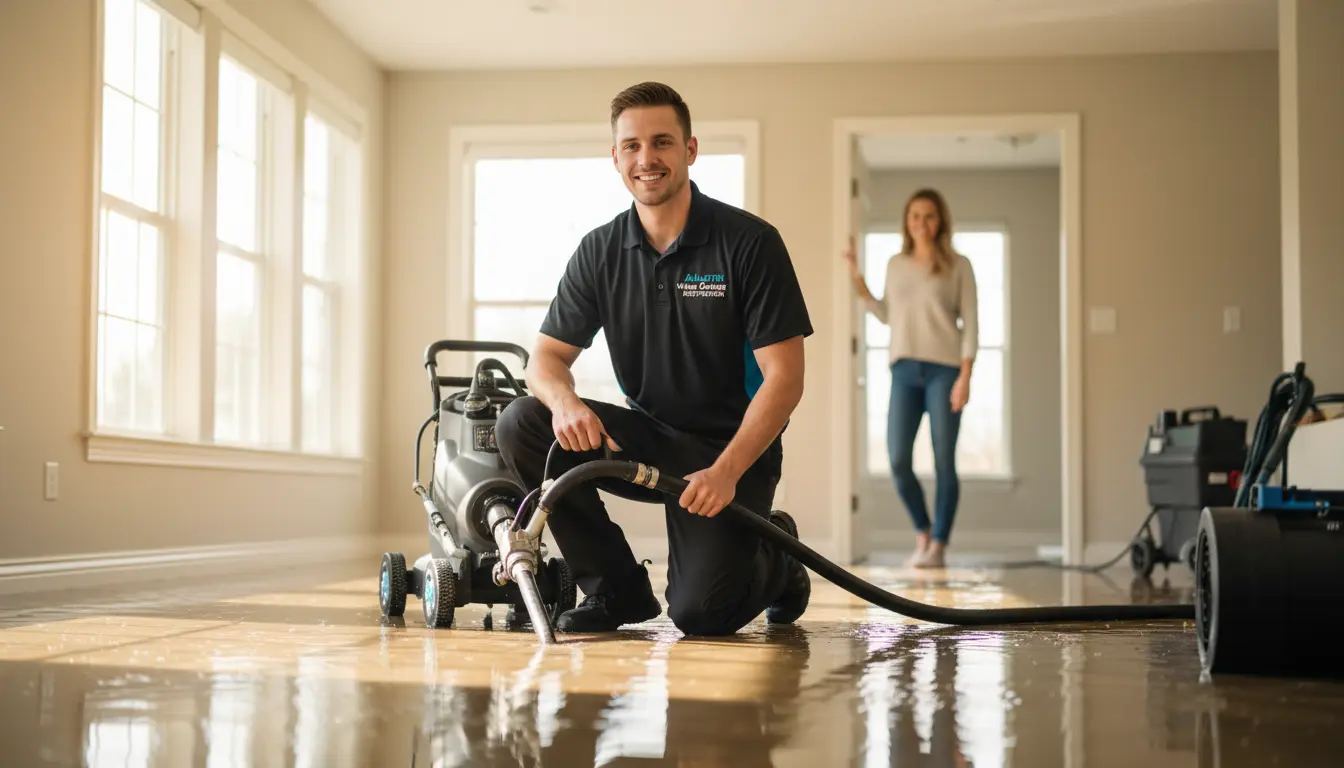
If you are searching for the best way to dry a flooded basement quickly and safely, you are facing a critical timeline. Arlington, Texas, residents face unique hydrostatic challenges due to the area’s expansive clay soils and humid subtropical climate. When the ground becomes hyper-saturated during seasonal downpours, water physically forces its way through microscopic cracks in your foundation.
In below-grade spaces, trapped moisture cannot naturally evaporate. Without mechanical intervention, this stagnant water quickly destroys drywall, rusts HVAC components, and triggers toxic mold amplification. Understanding proper storm preparedness and rapid mitigation protocols is essential to saving your property’s structural integrity.
The Science Behind Basement Water Damage
Basement flooding is rarely just a surface issue; it represents a complete psychrometric failure of the indoor environment. Once water breaches the concrete, it rapidly wicks upward through the wooden sill plates and into the wall cavities. This hidden moisture path compromises load-bearing framing long before visible stains appear on the surface.
Property owners must aggressively monitor for the 5 signs of hidden water damage in Arlington homes. Key indicators include unexplained spikes in indoor humidity, efflorescence (white, chalky powder) on concrete walls, and persistent earthy odors. If you smell a musty odor, active microbial colonization has already commenced within your walls.
The IICRC-Certified Mitigation Process
Standard wet-vacuums and household box fans are completely ineffective against structural basement flooding. Certified restoration teams deploy a strict, science-backed drying protocol designed to manipulate the thermodynamics of the room:
- Psychrometric Assessment: Technicians use thermal imaging cameras and penetrating probes to map the exact perimeter of the water migration.
- Deep Extraction: Industrial truck-mounted vacuums pull thousands of gallons of standing water out of the space, drastically accelerating the drying timeline.
- Engineered Dehumidification: Low Grain Refrigerant (LGR) units push the air below 34 Grains Per Pound, forcing bound moisture out of saturated framing.
- Botanical Sanitization: EPA-registered antimicrobials are applied to neutralize raw sewage pathogens and prevent mold spores from taking root.
Applying these techniques immediately is the only way to halt secondary swelling and rot. Learn exactly how this process unfolds in our comprehensive step-by-step guide to emergency water removal in Arlington.
Performance Impact & Strategy Comparison
Attempting a DIY cleanup in a basement environment is a high-risk gamble that almost always results in long-term structural failure. The consolidated data table below highlights the extreme differences in performance, safety, and financial risk between amateur cleanup and engineered structural drying.
| Cleanup Strategy | Drying Timeline | Final Moisture Level | Safety & Effectiveness Risk |
|---|---|---|---|
| DIY (Towels & Box Fans) | 1 to 2 Weeks | > 20% (Remains Damp) | Low Effectiveness / Extreme Mold Risk |
| Uncertified Handyman | 4 to 7 Days | 15% to 18% | Medium / Voids Carrier Guidelines |
| Professional LGR Drying | 24 to 72 Hours | < 10% (Dry Standard) | High / Property Secured & Sanitized |
Security, Safety, and Pricing Logistics
Basement floodwaters are highly dangerous. If the water originates from outside ground runoff or a sewer backup, it is classified as Category 3 “black water.” This liquid contains lethal pathogens, agricultural chemicals, and extreme electrical shock risks from submerged outlets. Never wade into a flooded basement without shutting off the main electrical breaker to the home.
Mitigation pricing is calculated per square foot and scales based on the category of the water. Standard clean-water extraction is highly cost-effective if addressed within 24 hours. Delaying the cleanup forces the water category to degrade, requiring costly biohazard containment and structural demolition.
Common Mitigation Mistakes to Avoid
- Delaying the extraction: Waiting for an insurance adjuster before removing standing water guarantees permanent mold colonization.
- Relying on consumer fans: Standard fans simply vaporize moisture into the air, drastically increasing indoor humidity and causing secondary swelling in upper floor joists.
- Ignoring hidden moisture: Assuming a basement is dry just because the concrete looks dry, while the baseboards and drywall remain completely saturated.
Advanced Frequently Asked Questions
The active extraction and LGR dehumidification phase typically concludes within 3 to 5 days. However, if the flooding requires the removal of contaminated drywall or flooring, the reconstruction phase will extend the timeline.
Most standard policies cover sudden internal failures, such as a burst water heater or ruptured supply line. However, ground water that seeps in from the outside due to heavy rain requires a separate National Flood Insurance Program (NFIP) policy.
Unfortunately, no. Cardboard acts as a sponge for contaminated water and immediately begins growing mold. Valuables should always be stored in sealed, waterproof plastic bins elevated off the basement floor.
Do not let trapped moisture dictate the lifespan of your foundation or jeopardize your family’s respiratory health. If you are dealing with a flooded basement, fast action is your only defense against compounding financial losses. Reach out to our 24/7 emergency dispatch today via our contact us page for a free estimate, and let our certified experts secure your home.