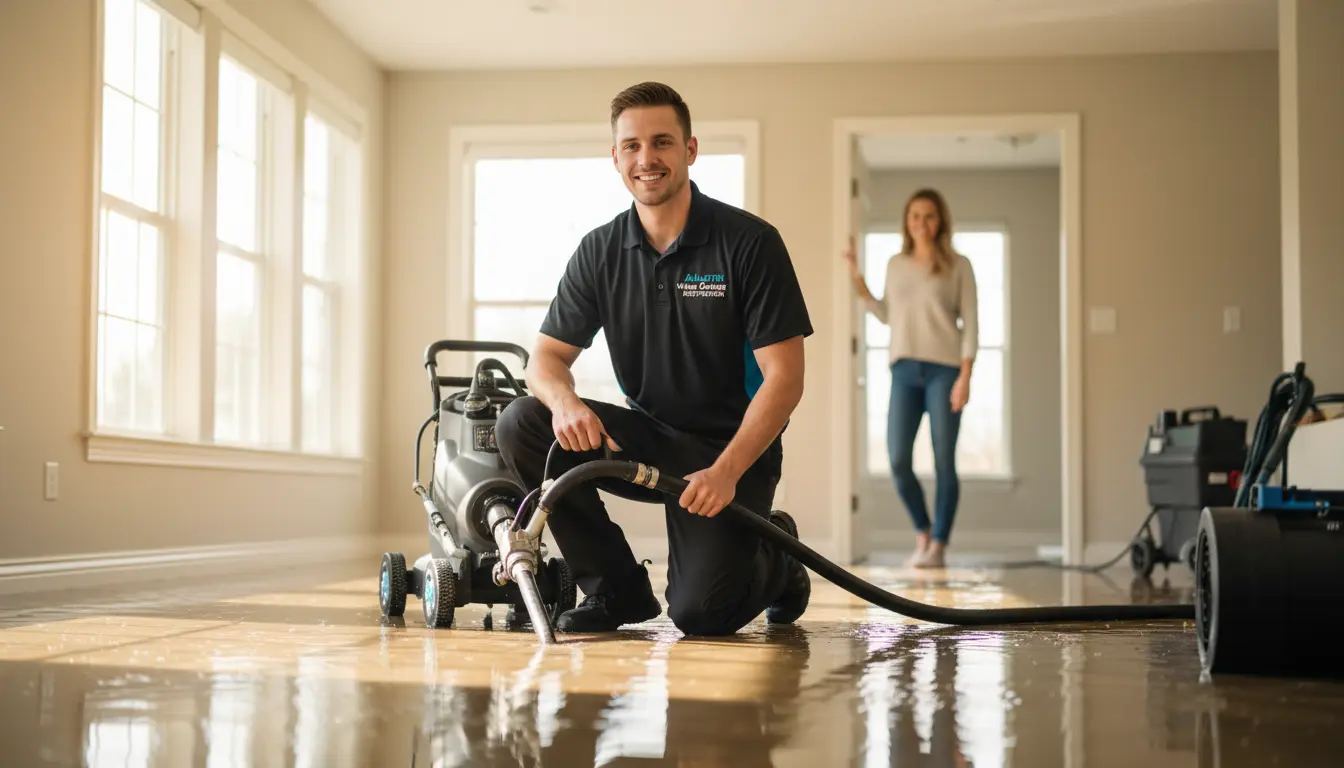
Water damage can be a devastating experience for property owners, particularly when it threatens expensive textiles and upholstery. With Arlington’s humid subtropical climate, a sudden pipe burst or appliance leak can rapidly saturate your living space. If you are searching for highly technical water damage restoration near me, the priority is often salvaging your investments rather than throwing them away. By employing advanced psychrometric engineering and heavy-duty subsurface extraction, it is frequently possible to completely dry carpets, padding, and furniture without resorting to costly replacements.
The Science of Salvaging Carpets and Furniture
Whether a carpet or sofa can be saved depends entirely on two factors: the category of the water and the speed of the extraction. If your home is flooded with “clean water” (Category 1) from a ruptured supply line, the textiles are highly salvageable within the first 24 to 48 hours. However, because Arlington’s ambient indoor humidity prevents natural evaporation, this trapped water will quickly degrade into a biohazard, initiating mold growth deep within the carpet pad and upholstery foam.
Critical Signs You Need Immediate Extraction
Do not wait for visual mold to appear. If your textiles are compromised, you must look for the invisible indicators of deep saturation. The primary signs include a carpet that feels “squishy” underfoot even after surface towel-drying, water pooling around the wooden legs of your furniture, and the sudden onset of a musty, earthy odor. Once you smell mold, the microbial colonization of your carpet’s primary backing has already begun.
The IICRC-Certified Restoration Process
Drying wall-to-wall carpeting and dense upholstery requires industrial mechanics. A certified mitigation team follows a strict, IICRC-compliant restoration process to save your belongings:
- Subsurface Extraction: Technicians utilize specialized tools, such as weighted water claws or motorized riding extractors, to physically compress the carpet and pad. This pulls thousands of gallons of water from beneath the surface without having to rip the carpet up.
- Furniture Blocking: All heavy furniture is immediately elevated on high-density foam blocks or foil tabs to prevent the wood stains from permanently bleeding into the wet carpet fibers.
- Engineered Dehumidification: Low Grain Refrigerant (LGR) dehumidifiers and high-velocity axial fans are strategically positioned to “float” the carpet, blowing extremely dry air directly underneath the primary backing.
- Botanical Sanitization: EPA-registered biocides are applied to neutralize any bacteria and prevent mold from taking root in the foam padding.
Performance Impact & Strategy Comparison
Opting to handle a flood yourself using standard consumer equipment drastically inflates the final financial outcome of the disaster. The consolidated data table below highlights the extreme differences in performance between amateur cleanup and engineered textile drying.
| Recovery Strategy | Drying Timeline | Carpet & Pad Salvage Rate | Mold Risk Profile |
|---|---|---|---|
| DIY (Towels & Shop-Vacs) | 7 to 14 Days | 0% (Total Replacement Required) | Extremely High (Guaranteed Mold) |
| Uncertified Handyman | 4 to 7 Days | Surface Only (Pad remains wet) | Medium (Risk of Odor & Rot) |
| Professional Extraction Team | 24 to 72 Hours | High (Saves original materials) | Eliminated (Environment Secured) |
Security, Safety, and Financial Risks
Attempting to dry wet carpets with ceiling fans or space heaters is a dangerous mistake. It vaporizes the moisture from the floor and pushes it directly into your drywall and upper cabinetry, causing secondary swelling. Furthermore, if the water originates from a sewage backup or storm runoff (Category 3), the carpet and pad cannot be saved under any circumstances due to extreme biohazard contamination and must be removed safely by technicians wearing full PPE.
Common Mitigation Mistakes to Avoid
- Delaying the extraction: Waiting to hear back from insurance adjusters before removing standing water guarantees the loss of your carpets and furniture.
- Using bleach on upholstery: Household bleach destroys textile dyes and does not kill mold roots embedded in foam padding.
- Ignoring hidden moisture: Assuming a carpet is dry just because the top fibers feel dry to the touch, while the underlying pad remains completely saturated.
Advanced Frequently Asked Questions
If the water was clean (Category 1) and extracted within 24 hours using specialized upholstery vacuums and LGR dehumidification, yes. However, if the water sat for days and began to smell, the internal foam has likely degraded and the piece must be discarded.
Standard clean-water extraction and drying range from $3 to $7 per square foot. This is significantly more cost-effective than the thousands of dollars required to purchase and install brand-new carpeting, premium padding, and replacement furniture.
Most standard policies cover sudden and accidental water intrusions, such as a burst pipe. They require you to mitigate the damage immediately, meaning the cost of professional drying is usually fully supported. We highly recommend reviewing our step-by-step guide to emergency water removal to understand the claims process.
Do not let trapped moisture permanently destroy your expensive carpets, rugs, and furniture. Fast action with industrial subsurface extraction equipment is your only defense against compounding financial losses. Contact our 24/7 rapid response dispatch today for a free assessment, and let our certified experts deploy the technology required to save your home’s interior.