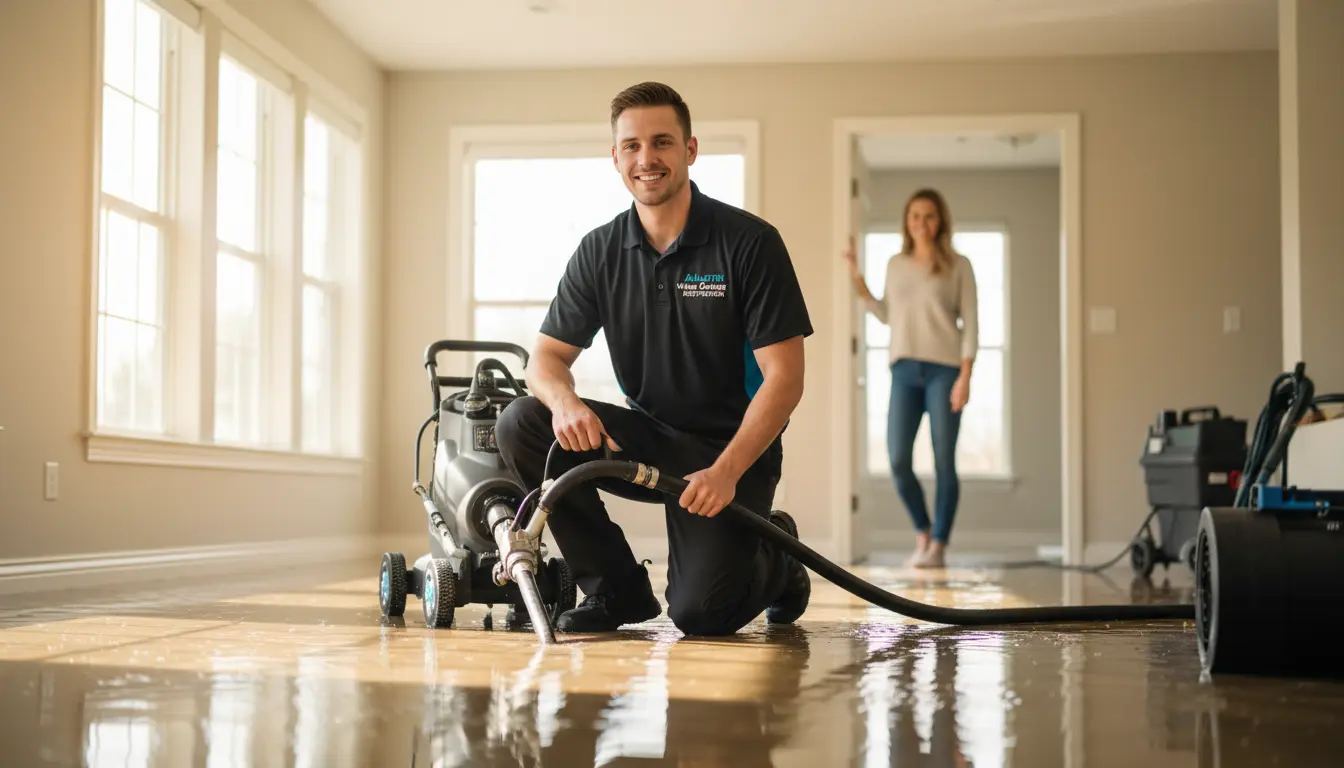
Water damage strikes fast. When it hits your Arlington home, you have a choice to make: clean it up yourself to save money, or call in a certified restoration team. Arlington’s humid climate and closeness to the Trinity River watershed make water damage worse here than in drier cities. If you live anywhere from Arlington Heights to South Arlington, this decision can affect your home’s value for years to come.
Why Water Damage Restoration Matters Locally
Water damage is rarely just what you can see. Here’s what happens after a pipe bursts or storm water gets in:
- Moisture soaks fast into drywall, wood framing, and carpet padding.
- Arlington’s humid air keeps that trapped moisture from drying out on its own.
- Damp wall cavities form a hidden “microclimate” that weakens your home’s structure.
- That same moisture is the perfect setup for mold to spread.
Want the full picture on how local weather affects your home? Read our ultimate guide to water damage restoration in Arlington, TX.
Critical Signs You Need Emergency Mitigation
Water damage often hides in plain sight — until the wood underneath starts to rot. Watch for these warning signs:
- Sudden spikes in humidity in one part of the house
- Baseboards pulling away from the wall
- Hardwood floors that start to cup or warp
- A musty smell that won’t go away
If you notice any of these, act fast. See our full breakdown of the 5 signs of hidden water damage in Arlington homes.
The Professional IICRC Restoration Process
Real restoration takes more than towels and a fan. Certified teams follow a science-backed process to dry out your home the right way:
- Map the damage: Thermal imaging shows exactly where water has spread, without tearing anything apart first.
- Remove standing water: Truck-mounted extraction tools pull out up to 95% of standing water right away.
- Dry the structure: LGR dehumidifiers create “thirsty air” that pulls hidden moisture out of wood studs from the inside out.
Curious how this stops dry rot before it starts? Check out our step-by-step guide to emergency water removal in Arlington.
Performance Impact & Strategy Comparison
DIY cleanup takes longer and often costs more in the end. The table below shows the difference between doing it yourself and hiring a professional team.
| Performance Metric | Without Mitigation (DIY) | With Professional Drying | Improvement Outcome |
|---|---|---|---|
| Active Drying Timeline | 5 to 14 Days | 1 to 3 Days | Up to 70% faster |
| Structural Moisture Content | Over 25% (still damp) | Under 10% (fully dry) | Stops dry rot before it starts |
Pricing, Safety, and Financial Risks
DIY cleanup looks cheaper up front. But it usually means longer drying times and a higher risk of mold. Professional costs depend on how contaminated the water is and how much space it covers — typically $2,000 to $5,000.
Try to fix it yourself, and you risk hidden mold that can void your insurance and force a full teardown later — costing far more than doing it right the first time. Here’s why professional restoration saves Arlington homeowners money by saving your original materials instead of replacing them.
| Cleanup Option | Initial Cost Estimate | Average Timeline | Effectiveness & Safety Risk |
|---|---|---|---|
| DIY Cleanup (Fans/Towels) | $500 | 1 to 2 Weeks | Low effectiveness, high mold risk |
| Uncertified Handyman | $1,500 | 4 to 7 Days | Medium risk, may void insurance |
| Professional IICRC Team | $3,000+ | 1 to 3 Days | High effectiveness, fully sanitized |
Security and Biohazard Safety
Flooded homes can be dangerous. Keep these risks in mind:
- Submerged outlets create a real risk of electrocution.
- Outside floodwater (Category 3) can carry raw sewage and farm runoff.
- Always shut off your main breaker before entering a flooded area.
- Only trained professionals with proper safety gear should handle contaminated water.
Common Mitigation Mistakes to Avoid
- Waiting too long: Delaying cleanup while you wait for an insurance call lets mold take hold.
- Using regular fans: Box fans just push moisture into the air — they don’t remove it, and they can damage upper walls.
- Trusting a “dry” feel: Carpet can feel dry on top while the padding underneath stays soaked.
- Hiring the wrong help: Uncertified workers often lack the tools to confirm your home is truly dry.
Advanced Frequently Asked Questions
Costs vary by severity. A minor clean-water leak might run $1,500. A major sewage backup that needs demolition and full sanitizing can top $6,000.
Extraction and drying usually take 1 to 3 days. If walls, baseboards, or flooring need to be rebuilt, the full job can stretch to a few weeks.
If water reached your drywall, hardwood, or subflooring, yes. DIY tools can’t pull moisture out of framing the way industrial equipment can — and that gap is exactly where hidden mold and dry rot get started.
Don’t wait for mold or structural damage to make the decision for you. If you’re dealing with a leak or sudden flooding, fast action is your best defense. Contact our rapid response team today for a free 24/7 assessment, and let our certified experts secure your home.