In the sweltering heat of a North Texas summer, HVAC systems run around the clock. For residents living in multi-family units, clogged condensate drain lines or cracked evaporator drip pans frequently cause silent, highly destructive leaks. Learning exactly how to fix water damage from AC leaks in Arlington apartments is critical, as this specific type of moisture intrusion often occurs inside wall cavities or ceiling plenums, leading to severe structural degradation before it is ever noticed on the surface.
The Unique Danger of Apartment AC Leaks
Unlike a single-family home where a leak usually affects a single floor, an AC leak in a multi-story Arlington apartment complex can cascade down through shared walls, destroying multiple units simultaneously. Because the ambient humidity in Texas is naturally high, the water that pools inside these dark, insulated ceiling and wall cavities cannot evaporate. Instead, it soaks into the drywall and wooden framing, creating an ideal incubator for toxic microbial growth.
Identifying the Silent Drip
Because HVAC units are often housed in utility closets or attic spaces, the water damage is rarely obvious right away. You must aggressively monitor your apartment for the 5 signs of hidden water damage in Arlington homes. Key indicators include unexplained yellow or brown stains expanding across your ceiling, peeling or bubbling paint near utility closets, and a persistent musty odor circulating through your air vents whenever the AC turns on.
The Professional IICRC Restoration Process
Wiping up the visible puddle beneath your air handler is completely ineffective at stopping secondary structural damage. Certified mitigation teams follow a strict psychrometric protocol to stabilize the environment and protect the building envelope. To understand the science behind this process, review our ultimate guide to water damage restoration in Arlington, TX.
- Psychrometric Assessment: Technicians use infrared thermal imaging to trace the exact path of the AC leak behind the drywall.
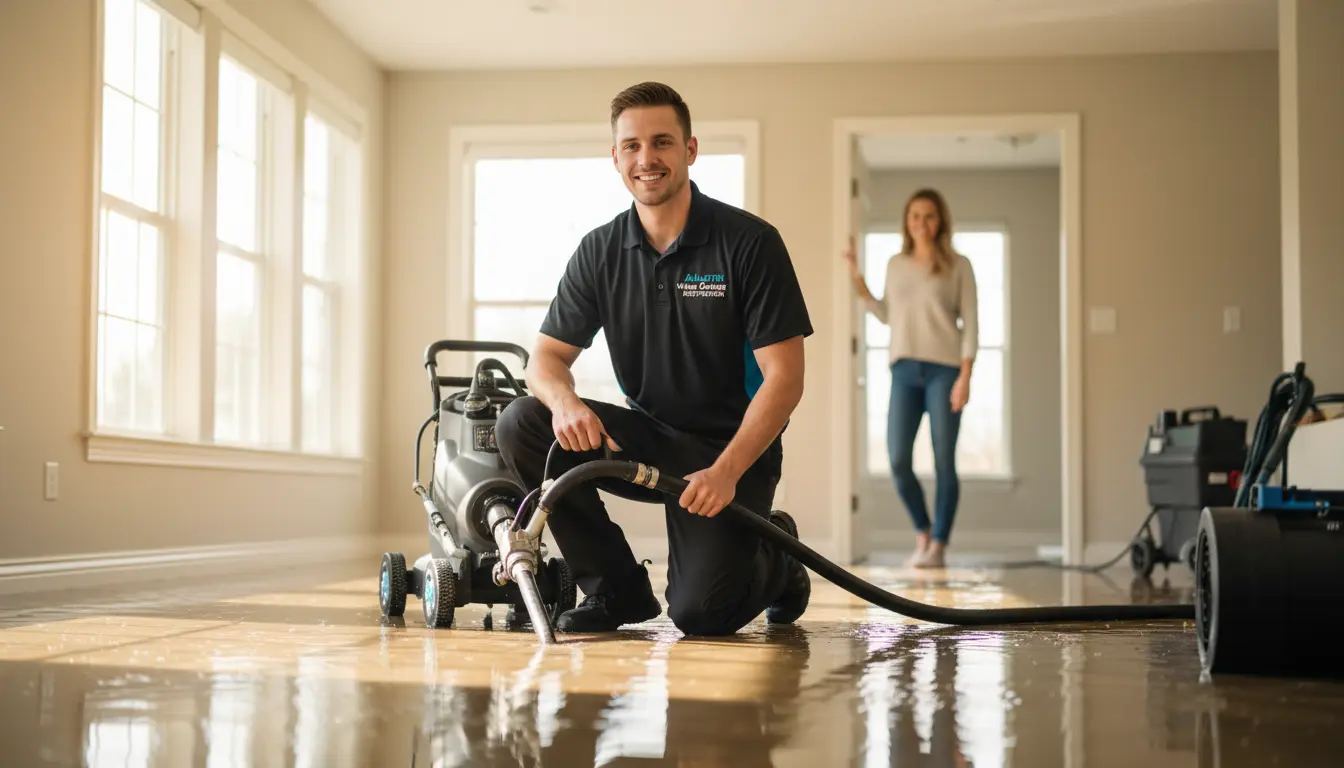
- Moisture Extraction: Industrial vacuums pull the standing water out of the carpets and utility closet subfloors.
- Engineered Dehumidification: Low Grain Refrigerant (LGR) dehumidifiers are deployed to push the indoor air to extreme dry standards, forcing trapped moisture out of saturated drywall and framing.
- Botanical Sanitization: EPA-registered antimicrobials are applied to the HVAC chase to destroy mold spores before they are blown through the ductwork.
Performance Impact & Recovery Metrics
Attempting to dry out an AC leak by simply turning off the unit and opening a window is a guaranteed failure in Texas. Professional intervention drastically alters the recovery timeline and minimizes the total financial loss. The table below illustrates the extreme performance impact of engineered structural drying.
| Performance Metric | Without Mitigation (DIY) | With Professional LGR Drying | Improvement Outcome |
|---|---|---|---|
| Active Drying Timeline | 5 to 14 Days (or never) | 1 to 3 Days | Accelerated by up to 70% |
| Structural Moisture Levels | > 25% (Saturated/Damp) | < 10% (Dry Standard) | Prevents Drywall Collapse |
| Airborne Mold Risk | Extremely High | Eliminated | Secures HVAC Air Quality |
Pricing, Safety, and Strategy Comparison
The cost of emergency mitigation for an AC leak is directly tied to how long the water has been sitting and the total square footage affected. Because condensate water is initially clean (Category 1), immediate extraction is highly cost-effective, typically ranging from $3 to $7 per square foot. However, if the water sits for 48 hours, it degrades into a biohazard, heavily inflating the required repair costs.
| Cleanup Option | Initial Cost Estimate | Average Timeline | Effectiveness & Safety Risk |
|---|---|---|---|
| DIY Cleanup (Fans/Towels) | $100 – $300 | 1 to 2 Weeks | Low Effectiveness / Extreme Mold Risk |
| Apartment Maintenance Only | Covered by Lease | 4 to 7 Days | Medium / Often ignores hidden wall moisture |
| Professional IICRC Team | $1,500 – $3,000 | 1 to 3 Days | High / Property Secured & Sanitized |
Security, Safety, and Biological Hazards
An AC leak inside an apartment presents immediate, life-threatening hazards. Because the water often pools near the air handler’s electrical components or drips through lighting fixtures in the ceiling below, there is an extreme risk of electrocution. Never attempt to clean water pooling near your HVAC unit without first shutting off the breaker to the system. We highly recommend following a step-by-step guide to emergency water removal to ensure you do not compromise your safety.
Common Mitigation Mistakes to Avoid
- Relying entirely on property management: Apartment maintenance teams often fix the AC unit but fail to properly extract the water from the wall cavities, leading to hidden mold.
- Delaying the extraction process: Waiting to see if the wet spot “dries on its own” guarantees permanent mold colonization in the drywall.
- Using standard box fans: Consumer fans simply vaporize moisture into the air, drastically increasing indoor humidity and causing secondary swelling in baseboards.
- Painting over water stains: Covering up a brown ceiling stain without verifying the cavity behind it has returned to its dry standard ensures hidden framing rot.
Advanced Frequently Asked Questions
Typically, the landlord or property management company is responsible for repairing the physical AC unit and the building’s drywall. However, if your personal belongings (furniture, electronics, rugs) are damaged by the water, your renter’s insurance is responsible for covering those losses.
If professional extraction and LGR dehumidification are deployed immediately, the active drying phase usually concludes within 24 to 72 hours. If the drywall has already lost its structural integrity, it must be cut out and replaced.
Initially, condensate water is relatively clean. However, the drip pans and drain lines where the water originates are often filled with dust, algae, and biological buildup. If this water spills into your apartment and sits for more than 48 hours, it becomes a Category 3 biohazard capable of supporting toxic black mold.
Do not let a silent HVAC leak compromise your living space or your respiratory health. If you discover pooling water or ceiling stains in your apartment, fast action is your only defense against compounding structural failure. Reach out to our 24/7 rapid response dispatch today via our contact us page for a free technical assessment, and let our certified experts secure your environment.