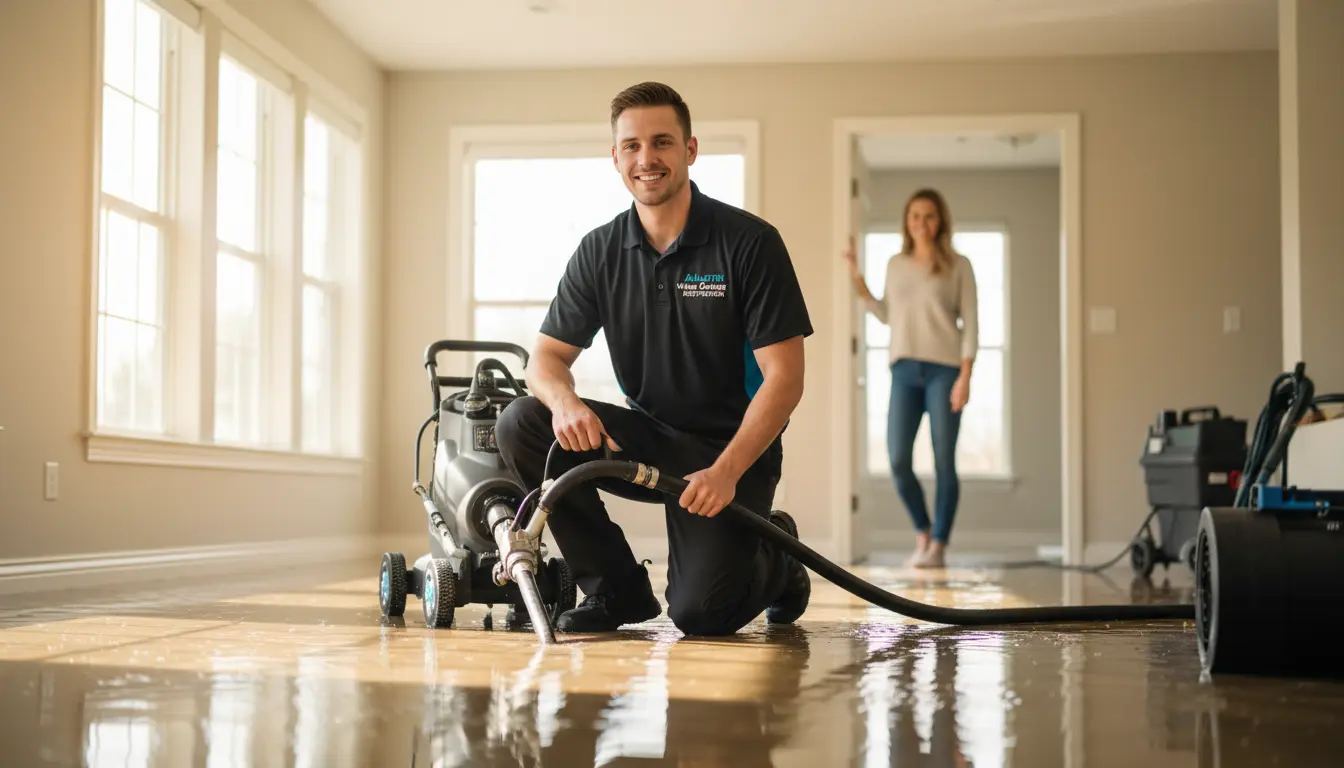
Water damage in the humid Texas climate presents a unique psychrometric nightmare for property owners. When the ambient outdoor humidity is naturally high, moisture trapped inside your building envelope from a pipe burst or storm intrusion cannot evaporate naturally. Instead, it creates a stagnant, high-humidity microclimate inside your wall cavities and subfloors. The best methods to prevent mold after water damage in Arlington involve immediate mechanical extraction and aggressive structural drying. To understand your property’s specific vulnerabilities, review the top 7 causes of water damage in Texas homes.
The 48-Hour Biological Threat
Mold spores are naturally present in every indoor and outdoor environment. However, they remain dormant until they are introduced to their primary catalyst: persistent moisture. In the DFW metroplex, toxic black mold (Stachybotrys chartarum) and Aspergillus can begin aggressively colonizing saturated drywall, wooden framing, and carpet padding within just 24 to 48 hours of a water event.
Failing to stabilize the indoor climate within this critical timeline practically guarantees a costly mold remediation project. Immediate intervention halts this biological clock, saving your home’s structural framing from irreversible dry rot.
Identifying Silent Moisture Intrusion
Surface puddles are easy to clean, but hidden moisture migration is what destroys homes. You must actively monitor for the invisible signs of structural saturation. Key indicators include unexplained spikes in your home’s relative humidity, baseboards separating from the wall, hardwood floorboards beginning to “cup” at the edges, and a persistent earthy or musty odor. If you smell mold, it is already feeding on your home’s infrastructure.
The Scientific Restoration Protocol
To outpace microbial growth, certified mitigation teams completely bypass standard consumer tools. You cannot prevent mold by blowing air across wet carpet. A professional water damage restoration process relies entirely on manipulated thermodynamics:
- Thermal Moisture Mapping: Using infrared cameras and penetrating probes to trace the exact path of the water behind walls without unnecessary demolition.
- Deep Subsurface Extraction: Deploying truck-mounted, high-lift vacuums to physically rip thousands of gallons of standing water out of the environment.
- Engineered Dehumidification: Placing Low Grain Refrigerant (LGR) dehumidifiers to push the indoor air below 34 Grains Per Pound (GPP), creating “thirsty air” that pulls bound moisture out of the drywall.
- Botanical Sanitization: Applying EPA-registered biocides to neutralize any existing pathogens and establish an antimicrobial barrier against future spores.
Performance Impact & Strategy Comparison
Attempting to handle a flood yourself drastically alters the recovery timeline and heavily inflates the final financial outcome of the disaster. The consolidated data table below highlights the extreme differences in performance between amateur cleanup and engineered structural drying.
| Recovery Strategy | Drying Timeline | Final Moisture Level | Mold Risk Profile |
|---|---|---|---|
| DIY Cleanup (Fans/Towels) | 7 to 14 Days | > 20% (Remains Damp) | Extremely High (Guaranteed Mold) |
| Uncertified Handyman | 4 to 7 Days | 15% to 18% | Medium (Risk of Secondary Swelling) |
| Professional LGR Drying | 24 to 48 Hours | < 10% (Dry Standard) | Eliminated (Environment Secured) |
Security, Safety, and Financial Risks
Water intrusion introduces immediate, lethal hazards. Submerged electrical outlets create extreme electrocution risks, and floodwater entering from outside the home (Category 3) contains raw sewage pathogens and agricultural chemicals. By calling an emergency water removal team immediately, you drastically lower your financial risk. Standard extraction is highly cost-effective, whereas delaying cleanup forces technicians into full-scale biohazard containment and structural demolition, inflating costs by thousands of dollars.
Common Mitigation Mistakes to Avoid
- Delaying the extraction process: Waiting to hear back from insurance adjusters before extracting standing water ensures the loss of salvageable materials.
- Using standard ceiling fans: Consumer fans simply vaporize moisture into the air, drastically increasing indoor humidity and causing secondary damage to upper drywall.
- Painting over water stains: Attempting to cover up a brown ceiling stain without verifying the cavity behind it is dry ensures hidden framing rot.
- Using bleach to kill mold: Household bleach is primarily water and does not kill mold roots on porous surfaces like wood and drywall; it actually feeds the mold after the chlorine evaporates.
Advanced Frequently Asked Questions
Standard clean-water extraction and drying range from $3 to $7 per square foot. However, highly contaminated flooding that requires structural tear-outs, mold remediation, and complete biohazard sanitization will significantly increase the total invoice.
The active extraction and LGR dehumidification phase typically takes 2 to 4 days. If the walls, floors, and baseboards require full reconstruction due to mold infiltration, the total timeline can span several weeks.
In Texas, mold coverage is heavily restricted. If the mold resulted directly from a sudden, covered water loss that was mitigated quickly but still resulted in spores, you may have limited coverage. If the mold grew because you delayed cleanup or ignored a slow leak, the claim will almost certainly be denied.
Do not let trapped moisture dictate the lifespan of your property or jeopardize your family’s respiratory health. If you are dealing with a severe leak or storm intrusion, fast action with modern equipment is your only defense against compounding financial losses. Contact our 24/7 rapid response dispatch today for a free assessment, and let our certified experts deploy the heavy-duty extraction equipment required to secure your home.